When investing in a rubber injection molding machine, one of the first decisions you’ll face is whether to go vertical or horizontal. The choice affects everything from your rubber injection molding process to factory layout, automation potential, and long-term production costs. This guide breaks down the key differences to help you find the right molding solutions for your specific needs.
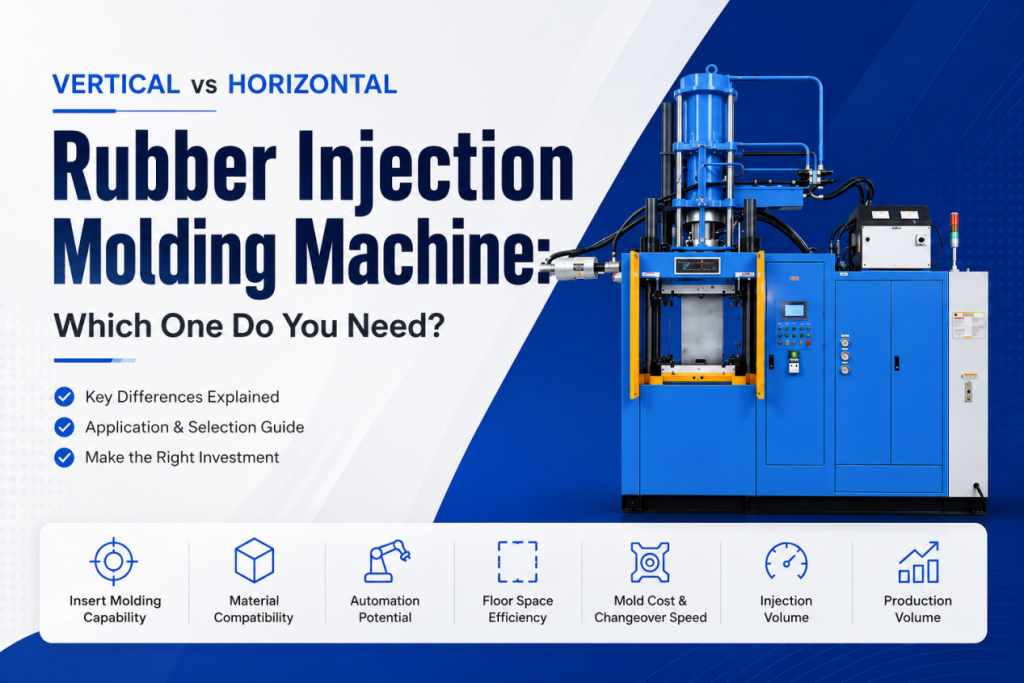
What Is a Vertical Rubber Injection Molding Machine?
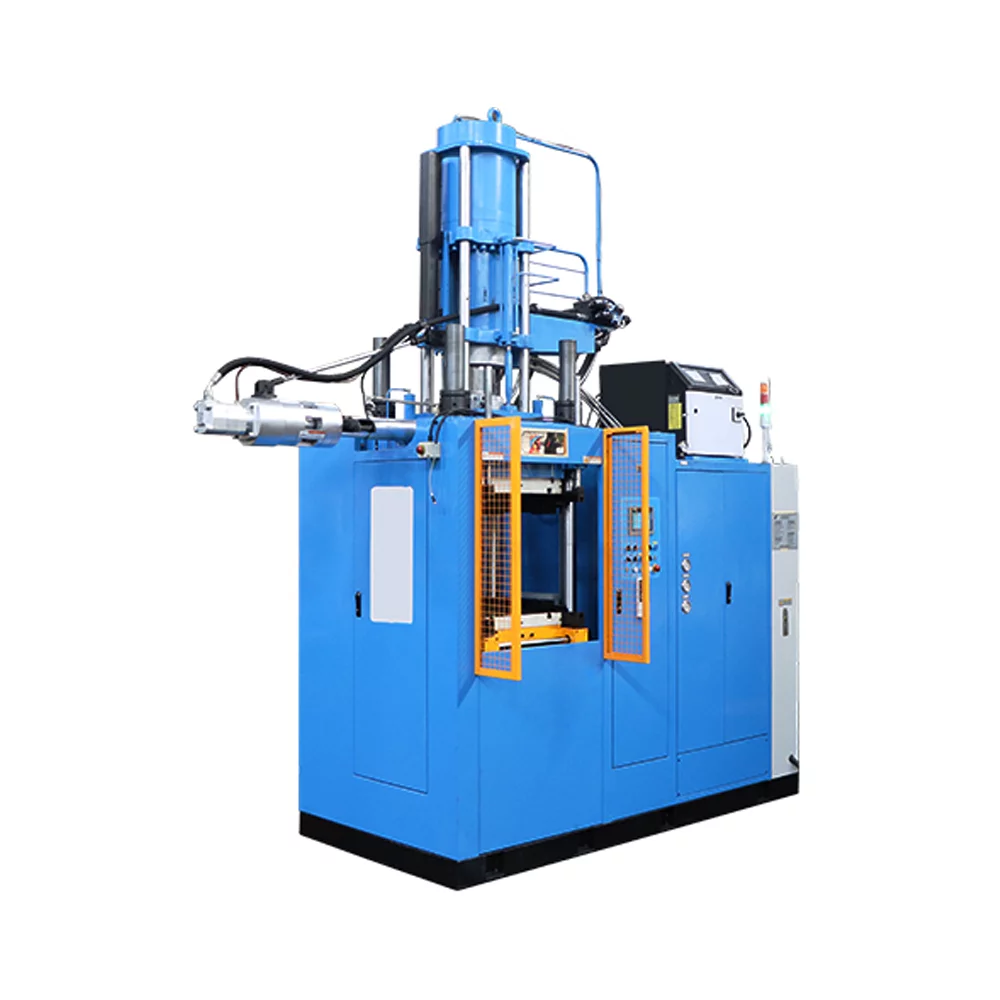
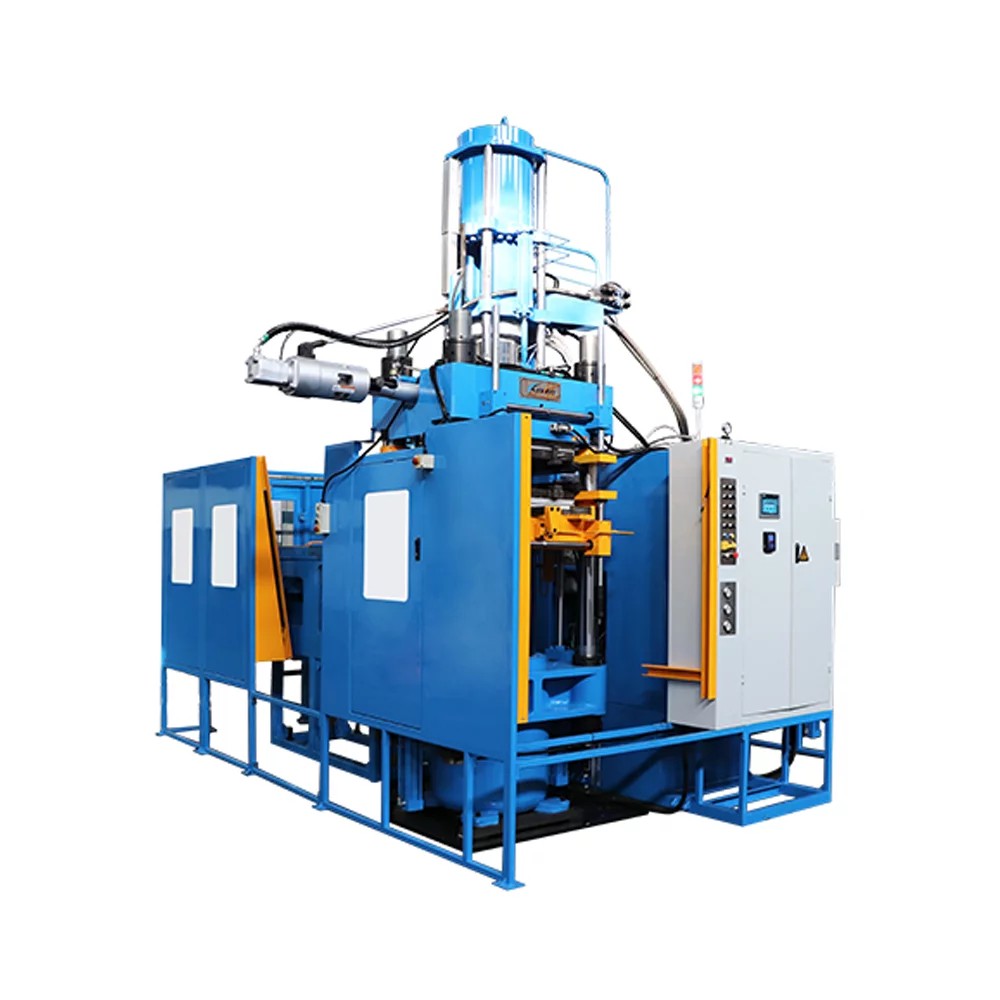
A vertical injection molding machine uses a vertically oriented clamping unit where the mold opens and closes from top to bottom, with the injection unit mounted horizontally on the side. It is purpose-built for two core production challenges: reliable insert molding and precise HTV solid silicone rubber processing.
Key Features
- Vertically oriented clamping unit for stable top-to-bottom mold closing
- Side-mounted injection unit for precise material feeding
- Gravity-assisted insert placement with no mechanical fixtures needed
- Compatible with HTV silicone and a range of rubber materials
- Compact floor footprint for space-limited factories
Advantages
- Gravity holds inserts naturally, reducing misalignment risk and defect rates
- Lower mold tooling costs and faster changeover for multi-product runs
- Well-suited for small to medium batch sizes with high product variety
Limitations
- Ceiling height requirements can be a constraint in some facilities
- Harder to integrate into fully automated production lines
- Generally,lower injection volume capacity than horizontal machines
What Is a Horizontal Injection Molding Machine?
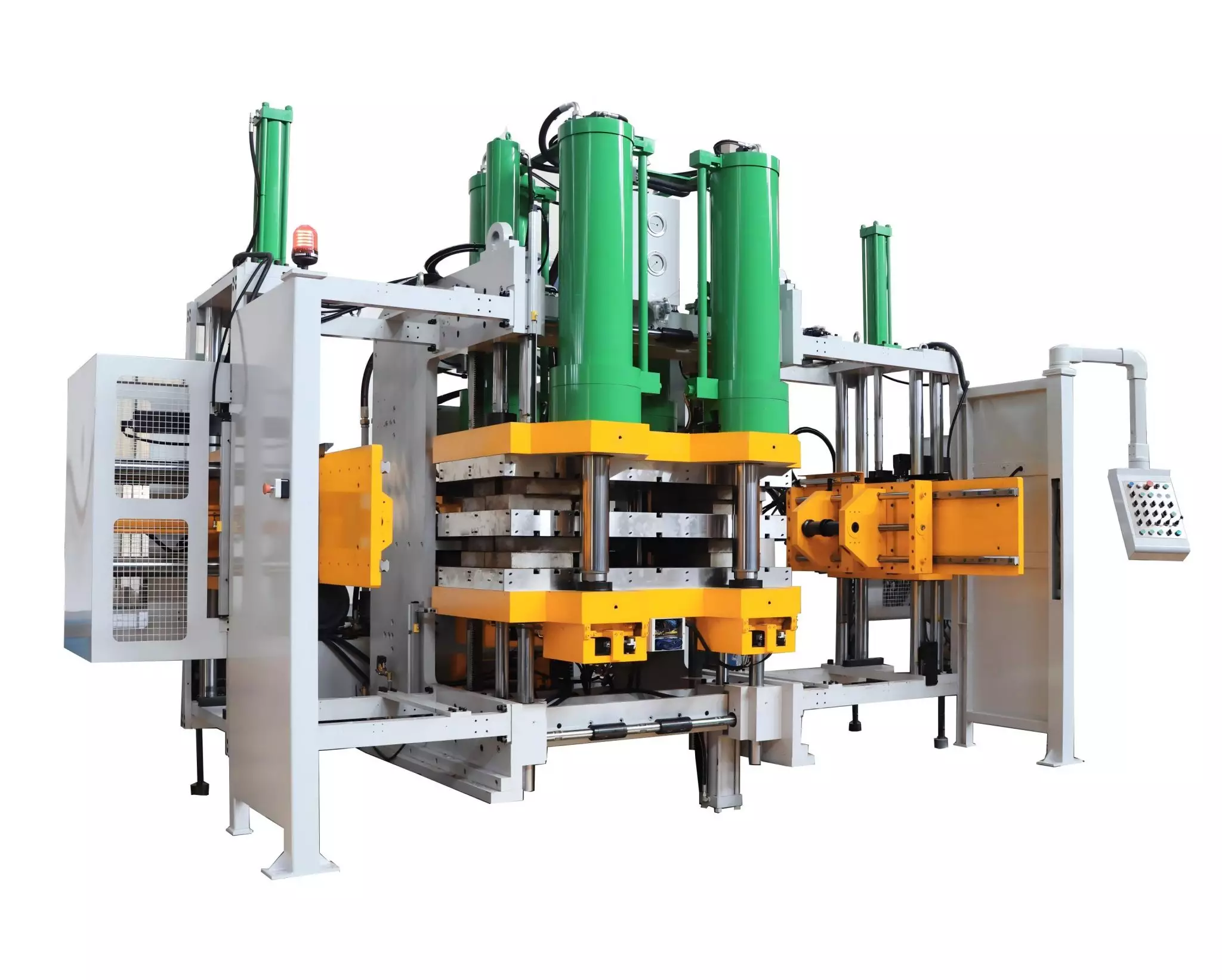
A horizontal injection molding machine aligns both the clamping unit and injection unit along the same horizontal axis. It is the most widely used configuration in general rubber molding, built for one primary goal: high-volume, consistent output with full automation line compatibility.
Key Features
- Clamping and injection unit aligned on a single horizontal axis
- High injection volume capacity for large parts and multi-cavity molds
- Easy integration with conveyor systems and robotic automation
- FIFO injection unit option for consistent material flow and reduced waste
- Suitable for a wide range of general rubber materials
Advantages
- Natural fit for high-volume automated production lines
- Supports larger injection volumes for bigger parts or multi-cavity molds
- Easier operator access and maintenance on a single horizontal plane
Limitations
- Insert molding requires mechanical fixtures to hold inserts in place
- Larger floor footprint demands more factory space
- Less flexible for mixed product runs with frequent mold changes
Further reading: Rubber Injection Molding Process: How it Works, Types, and Key Defects
Vertical vs. Horizontal Rubber Injection Molding Machine: Head-to-Head Comparison
Choosing between a vertical and horizontal rubber injection molding machine is not just about machine structure. It affects how smoothly inserts are positioned, how materials are processed, how much factory space is required, and how easily your production line can be automated. To make the comparison more practical, the table below focuses on the factors that matter most in real manufacturing decisions.
What we are comparing:
- Insert molding capability: Determines whether your product can even be made on a given machine type
- Material compatibility: Matches the machine to your material
- Automation potential: Affects your long-term labor costs and throughput ceiling
- Floor space efficiency:Impacts factory layout planning
- Mold cost and changeover speed:Affects flexibility for multi-product manufacturers
- Production volume: Matches machine strengths to your actual output targets
Vertical vs. Horizontal Rubber Injection Molding: Head-to-Head Comparison
Feature | Horizontal Injection Molding | Vertical Injection Molding |
Clamping Direction | Side-to-side (Parallel to the floor) | Up-and-down (Top-to-bottom) |
Insert Molding | Limited/Complex: Inefficient as inserts may shift without special fixtures | Strong: Gravity keeps inserts stable and accurate during injection |
Material Compatibility | Best for standard rubber, silicone, and thermoplastics | Specialized for LSR, elastomers, and thermoset materials |
Automation Potential | High: Integrated with robots and conveyors for continuous output | Medium/High: Focused on rotary/shuttle tables for loading/unloading |
Floor Footprint | Large: Requires substantial horizontal space for machine and auxiliaries | Compact: Approximately half the footprint of horizontal machines |
Ceiling Height | Moderate requirement | Large: Requires significant vertical clearance |
Mold Cost | Lower: High degree of standardization reduces complexity | Higher: Tooling is often more intricate and specialized |
Mold Changeover Speed | Fast; superior accessibility for standard mold changes | Fast with specialized systems like rotary tables or quick-lock mechanisms |
Production Volume | High: Best for mass-produced standard parts with fast cycles | Specialized: Ideal for flexible, medium-volume, or hybrid component production |
Typical Industry | Automotive trim, Packaging, Consumer goods | Medical implants, Automotive sensors, Electronic connectors |
Which Rubber Injection Molding Machine Should You Choose?
There is no universal answer, but there are clear decision rules. Your product design, material type, and production model will each point you toward one configuration or the other. Work through the questions below to identify the right fit.
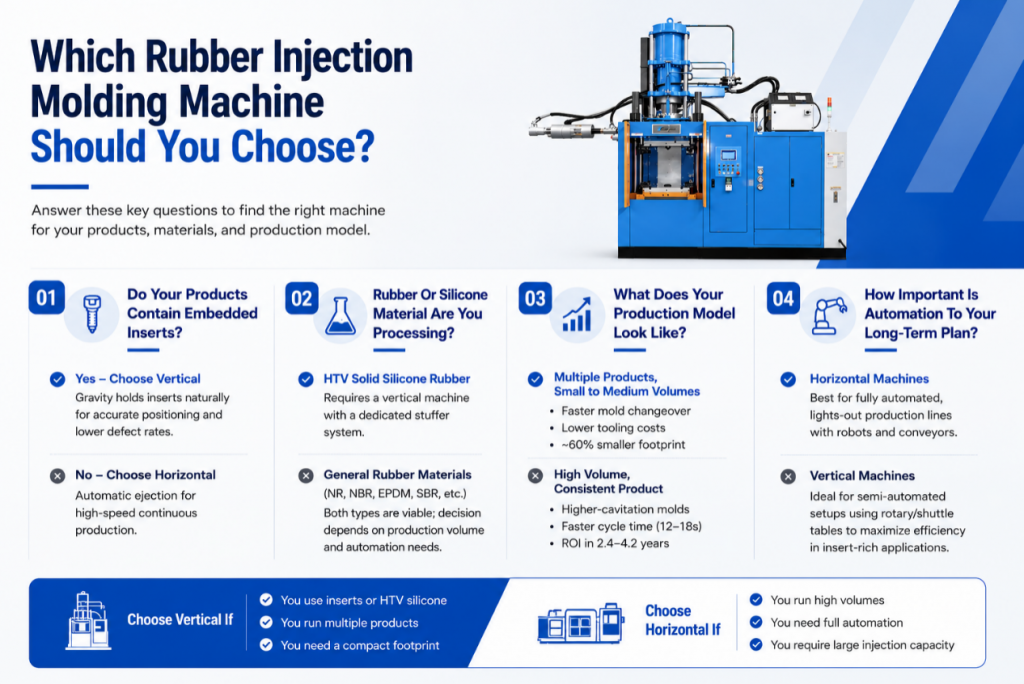
Do Your Products Contain Embedded Inserts?
If yes, a vertical injection molding machine is the practical choice. Gravity holds inserts naturally during each shot, ensuring accurate positioning of embedded metal parts, cables, or terminals and keeping defect rates low. For standard components without inserts, horizontal machines allow finished parts to eject automatically onto conveyors or into collection bins, keeping high-speed continuous production uninterrupted.
Rubber Or Silicone Material Are You Processing?
HTV solid silicone rubber requires a vertical machine equipped with a dedicated stuffer system designed to push high-viscosity silicone into the injection unit at a consistent feed rate. For general rubber materials such as NR, NBR, EPDM, and SBR, both machine types are technically viable, and the decision shifts to production volume and automation requirements.
What Does Your Production Model Look Like?
- Running multiple product types at small to medium volumes: a vertical machine’s faster mold changeover and lower tooling costs make it the more flexible choice for prototyping and high-mix production. Vertical machines also offer a ground footprint roughly 60% smaller than comparable horizontal configurations, making them well-suited for space-limited facilities[1].
- Running high volumes of a consistent product: horizontal machines support higher-cavitation molds and deliver average cycle times of 12 to 18 seconds, compared to 18 to 28 seconds for vertical machines[1]. At scale, this difference has a direct impact on unit cost and ROI, with horizontal machines typically returning investment within 2.4 to 4.2 years,depending on production volume[1].
How Important Is Automation To Your Long-Term Plan?
Horizontal machines integrate more seamlessly into fully automated, lights-out production lines, compatible with robotic systems and conveyors that handle parts from ejection through to packaging with minimal human intervention. Vertical machines excel in semi-automated setups using rotary, shuttle, or sliding tables, allowing inserts to be loaded at one station while the machine molds at another, effectively eliminating idle time in insert-rich applications.
Vertical and Horizontal Injection Molding Machine Applications
Vertical Injection Molding Machine
A vertical injection molding machine is commonly used for products that require stable insert placement, compact factory layout, or precise silicone rubber molding.
Typical applications include:
- Power and electrical industry:HTV silicone insulators, surge arrestors, hollow core bushings
- Cable accessories: Cable joints, terminations, and connector bodies requiring insert molding
- Low–voltage components:Fuse cutouts, low-voltage insulators, and electrical housings
- Silicone rubber products:Seals, gaskets, and custom silicone parts with embedded components
Horizontal Injection Molding Machine
A horizontal injection molding machine is better suited for high-volume production where automation, throughput, and repeatability are the main priorities.
Typical applications include:
- Automotive industry: Door seals, engine mounts, vibration dampeners, and O-rings
- Industrial rubber parts: Standard gaskets, bushings, and profiles for machinery and equipment
- Consumer rubber goods:Grips, handles, and household rubber components at scale
- General manufacturing: High-volume rubber parts where automation and throughput are the priority
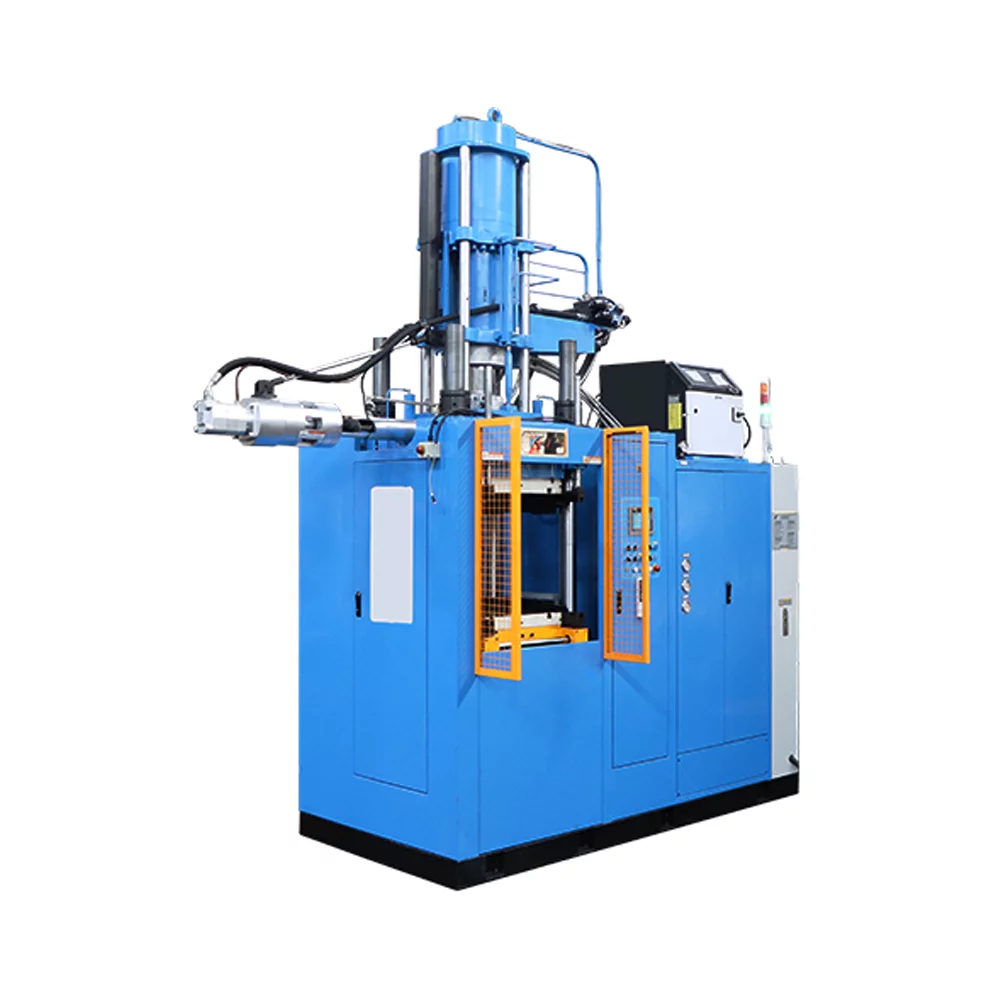
Which Hwayi Rubber Injection Molding Machine Is Right for You?
The right machine should do more than complete one molding cycle. It should keep inserts stable, control material flow precisely, and deliver repeatable quality across long production runs. For manufacturers producing high-precision rubber or silicone components, the Hwayi HYZ-E Series Rubber Injection Molding Machine is designed for these exact needs.
- Four-column vertical structure for stable clamping and mold parallelism
- Optional HTV silicone rubber material feeder for silicone rubber insulators, arresters, cable joints, and bushings
- Multi-phase injection pressure and speed control for different rubber molding requirements
- PLC production management with full process monitoring and storage for up to 300 recipes
- Accurate platen temperature control with ±2°C tolerance, PID calibration, and insulation plates to reduce heat loss
For buyers seeking a reliable rubber injection molding machine from an experienced injection molding machine manufacturer, the HYZ-E Series is a strong fit.
FAQs: Vertical vs Horizontal Injection Molding Machine
Q1: Can I switch between rubber and silicone materials on the same machine?
Switching between rubber and silicone materials on the same machine is possible but requires thorough cleaning of the barrel and injection unit between runs to prevent contamination. For factories regularly processing both materials, running dedicated machines for each material type is generally recommended to maintain consistent output quality.
Q2: Which machine type has lower maintenance costs?
Both machine types have comparable maintenance requirements when properly operated. Vertical machines may have a slight edge in mold maintenance costs due to lower mold tooling costs and simpler changeover procedures.
Q3: How do I choose the right clamping force for my rubber injection molding machine?
Clamping force depends on the projected area of your mold cavity and the injection pressure required for your material. A larger mold surface area or higher injection pressure requires greater clamping force to prevent flash and maintain part quality. Consulting your mold design specifications and material supplier recommendations is the most reliable way to determine the right tonnage for your application.
Ready to Choose Your Machine?
Both vertical and horizontal rubber injection molding machines serve distinct production needs. The right choice comes down to your product design, material requirements, and production scale. For manufacturers seeking reliable molding solutions backed by hands-on technical expertise, Hwayi offers purpose-built equipment designed for real production demands.
Contact us today to discuss your requirements and find the right machine for your application.
References
- https://dataintelo.com/report/global-co-injection-molding-machine-market
- https://easchangesystems.com/zh-hans/blog/how-to-reduce-mold-change-time/
- https://www.plasticmoldfactory.com/news/horizontal-vs-vertical-injection-molding-machines