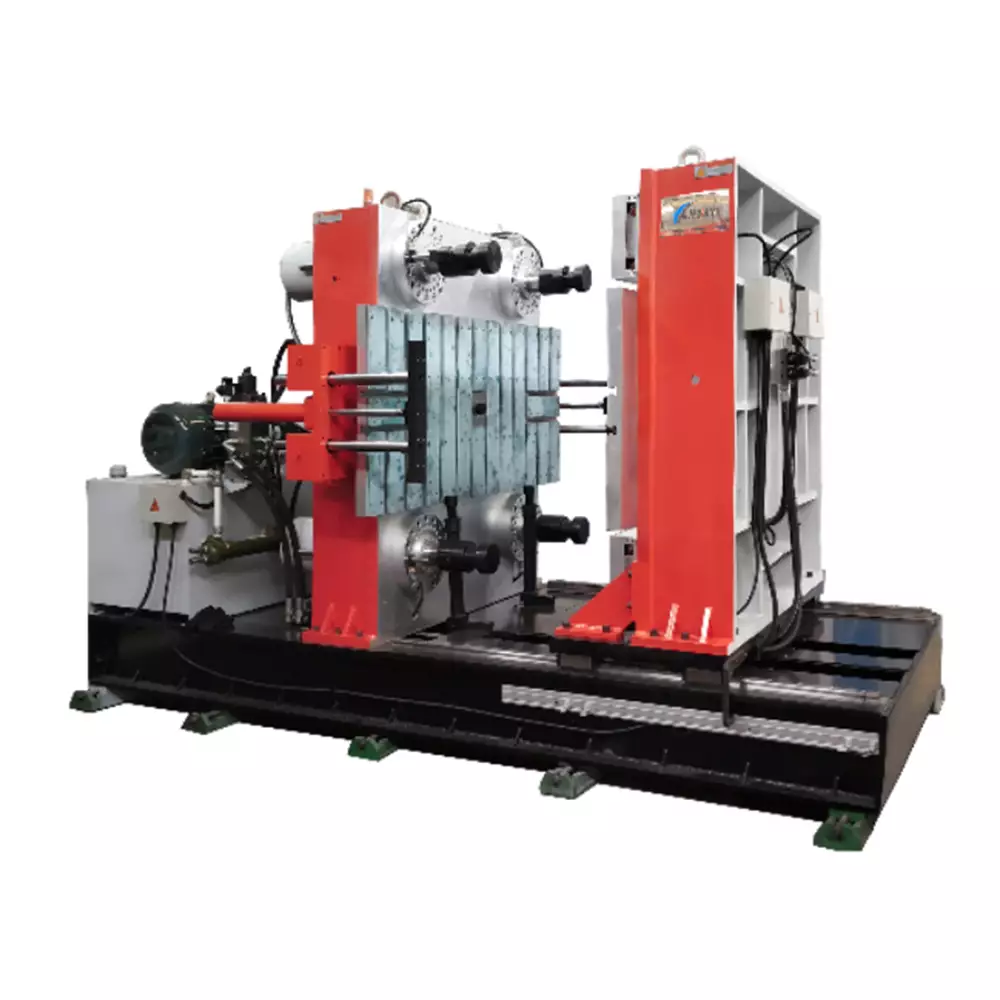
Rubber tracks are increasingly used in modern machinery, especially in heavy equipment applications, due to their flexibility and reduced ground impact compared to steel systems. This shift is driving higher demand for efficient production processes supported by advanced rubber vulcanization technology.
This article explores the key differences between rubber tracks and steel tracks, the advantages of this transition, and the growing need for modern rubber track manufacturing solutions.
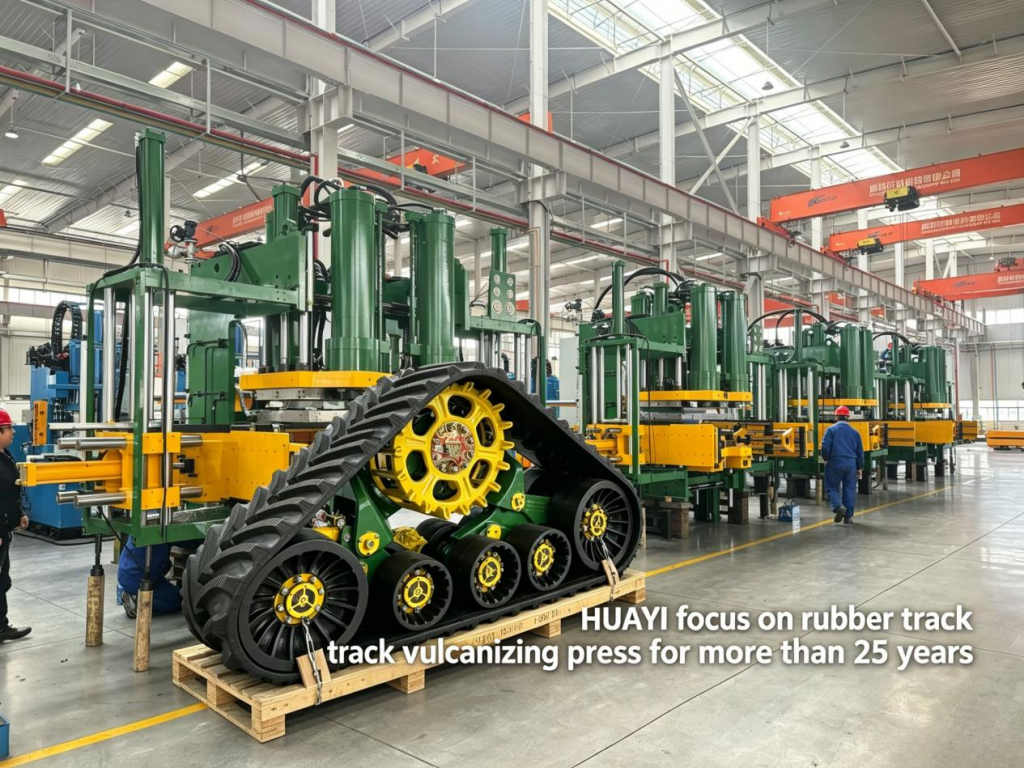
What Is a Rubber Track?
A rubber track is a closed-loop composite track system built from bonded layers of rubber, embedded steel cords, and reinforcement fabrics. This multi-layer construction gives the track its core advantage: the tensile strength needed to handle heavy machinery loads, combined with the elasticity that steel simply cannot provide.
The three essential components of a rubber track are:
- Outer rubber body: A wear-resistant tread layer formulated to withstand abrasion, UV exposure, and temperature variation.
- Steel cord reinforcement: High-tensile cords running longitudinally through the track, maintaining dimensional stability under load.
- Inner drive lugs: Precisely molded profiles on the inner surface that engage the sprocket to transmit power and keep the track aligned.
Rubber tracks are today found across mini and midi excavators, compact track loaders, combine harvesters, and urban construction vehicles.
What Is a Steel Track?
Steel tracks are all-metal track systems assembled from hardened steel links, drive pins, bushings, and bolted track shoes. Engineered for maximum structural strength, they have been the industry standard for decades — and in applications where sustained mechanical stress and highly abrasive conditions are the norm, they remain the preferred choice:
- Quarry and mining excavators
- Large crawler bulldozers
- Heavy demolition machinery
These are environments where no rubber-based system would hold up in the same way.
That said, as construction and agriculture increasingly require equipment to move across mixed terrain, operate in urban job sites, and protect surface-sensitive areas, the very characteristics that made steel track dominant began to work against it. That shift is exactly what opened the door for rubber track systems — and the advanced rubber vulcanizing press technology behind them — to take over.
What Are the Key Differences Between Rubber Tracks and Steel Tracks?
Rubber tracks and steel tracks differ not just in material, but in how they interact with the machine, the operator, and the working environment. The table below breaks down the key distinctions across the dimensions that matter most in real-world applications.
| Category | Rubber Track | Steel Track |
|---|---|---|
| Structural Design | Rubber body + steel cord reinforcement + drive lugs | Steel links + pins + bushings + track shoes |
| Weight Distribution | Lighter load distributed evenly across wider footprint | Heavier pressure concentrated at contact points |
| Durability | Consistent on suitable terrain; no metal-on-metal wear | Accelerated wear on abrasive surfaces; frequent part replacement needed |
| Maintenance Requirements | Minimal — no lubrication, low corrosion risk | Regular greasing; pins and bushings require periodic replacement |
| Typical Applications |
|
|
In most modern working environments, rubber track outperforms steel across weight distribution, maintenance, and day-to-day durability. Steel retains its edge only in extreme-load and high-abrasion conditions. For the majority of today’s machinery applications, the rubber track becomes the more practical and cost-effective choice.
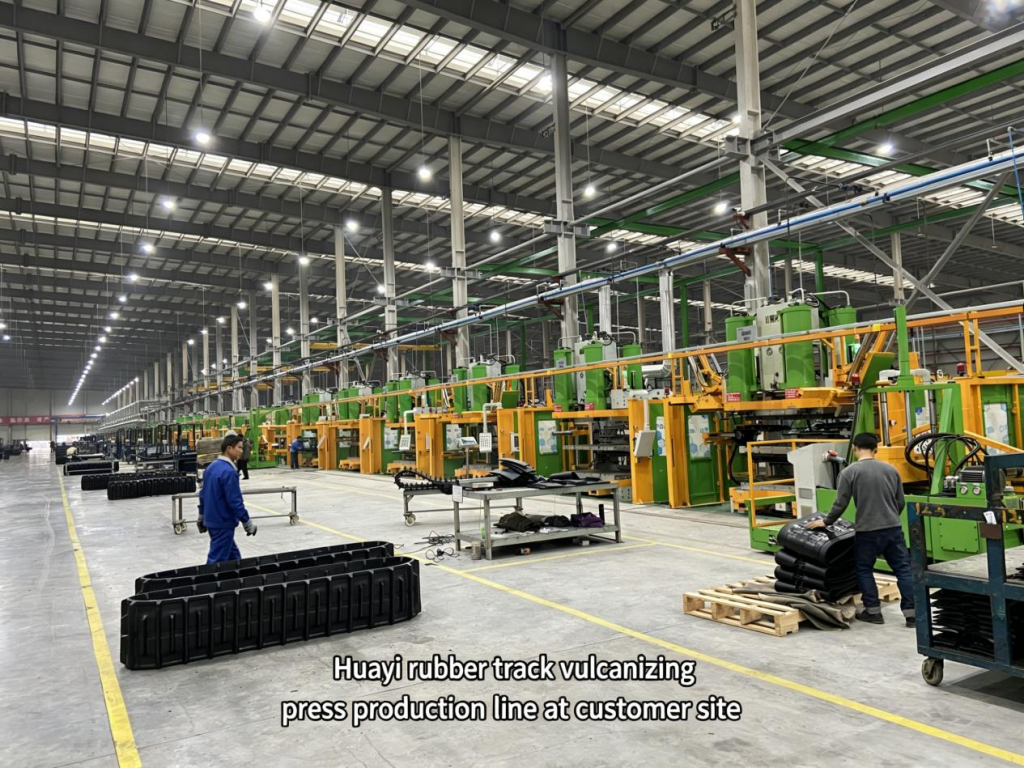
Advantages Driving the Shift Toward Rubber Track
As construction, agriculture, and utility equipment increasingly operate across mixed terrain and urban job sites, the practical advantages of rubber track systems have become more apparent.
Lower Ground Damage and Surface Protection
Rubber tracks distribute machine weight evenly across a wider footprint, significantly reducing ground pressure at any single contact point. On paved roads, finished concrete, farmland, and landscaped areas, this difference is immediately visible — steel track leaves behind gouges and compaction damage that a rubber track does not.
For contractors working on urban infrastructure or precision agriculture, surface protection is not a minor convenience. It directly affects project cost and site restoration requirements.
Reduced Noise and Vibration
The elastic properties of vulcanized rubber absorb shock and dampen vibration throughout the drivetrain, resulting in a noticeably quieter and smoother operation. This reduces operator fatigue over long shifts, but the impact goes further than comfort.
Lower noise levels make rubber-tracked machinery viable in environments where steel would be disqualifying: residential construction zones, hospital vicinity projects, indoor demolition work, and any site where noise restrictions are enforced.
Lower Maintenance and Operating Costs
Steel track systems demand regular lubrication, pin and bushing inspection, and periodic component replacement. Rubber tracks eliminate most of this routine. No greasing, no corrosion management, and longer intervals between service checks. Over a machine’s operational lifetime, these savings compound into a meaningful reduction in total cost of ownership.
Greater Flexibility in Urban and Restricted Environments
As job sites become more compact and access-restricted, equipment needs to do more in tighter spaces. Rubber tracks make this possible in ways steel cannot:
- Transition between indoor and outdoor areas without surface damage
- Operate on finished floors, paved roads, and soft ground within the same shift
- Maneuver in confined spaces where steel track width and rigidity become a liability
It’s one of the reasons rubber track adoption has accelerated most quickly in urban construction and utility work.
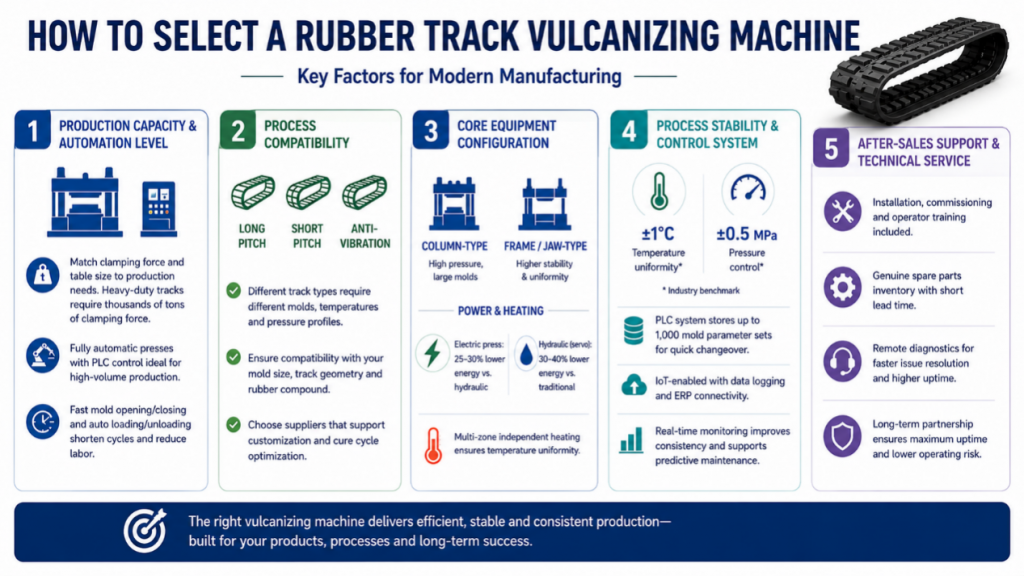
How to Select a Rubber Track Vulcanizing Machine for Modern Manufacturing
As demand for rubber tracks grows, manufacturers are paying more attention to production efficiency and stability. This makes the selection of a vulcanizing machine critical, with several key factors to consider below.
Production Capacity and Automation Level
Start with the numbers. Determine the clamping force and table size your production volume actually requires for heavy-duty track applications, where clamping forces can reach thousands of tons. From there, the automation question follows naturally.
For high-volume lines, fully automatic rubber vulcanizing equipment integrated with PLC control systems is the standard choice. Beyond reducing labor dependency, these systems eliminate the cycle-to-cycle variability that manual operation introduces. Features like fast mold opening and closing and automated loading and unloading further shorten production cycles without adding headcount.
Process Compatibility
Rubber tracks are not a single product category. Long pitch, short pitch, and anti-vibration designs each have different structural requirements, and the mold configurations, cure temperatures, and pressure profiles needed to produce them correctly vary accordingly. A press that works well for one track type may not deliver acceptable results for another.
This is why process compatibility needs to be evaluated before anything else. The machine has to accommodate your specific mold dimensions and track geometry, and the vulcanization cycle needs to be tunable to match the rubber compound you’re working with — natural and synthetic formulations respond differently under heat and pressure, and getting this wrong shows up as bonding defects or inconsistent hardness in the finished track. Suppliers that support customization and can work through your specific cure cycle requirements are worth the extra evaluation time.
Core Equipment Configuration
The structural form of the press determines how pressure is applied and how uniformly it is distributed:
- Column-type presses handle high-pressure, large-mold applications typical of heavy-duty track production
- Frame-type or jaw-type presses deliver greater stability and pressure uniformity, which matters for precision profiles
On the power side, electric presses now consume approximately 25–30% less energy than conventional hydraulic systems. If hydraulic is preferred, servo-based systems can close that gap, reducing consumption by 30–40% compared to traditional models. Pair either with multi-zone independent heating to ensure temperature uniformity across the full platen surface.
Process Stability and Control System
Before committing to any machine, ask the supplier what tolerances the control system is rated for. The industry benchmark for reliable rubber vulcanization is ±1°C for temperature uniformity and ±0.5 MPa for pressure control (Depending on the real situation).
Beyond raw tolerances, look at how the machine handles product variety. A PLC-based system that can store up to 1,000 mold parameter sets means switching between track types is a matter of loading a profile, not recalibrating from scratch. For facilities with higher integration requirements, IoT-enabled machines with data logging and ERP connectivity support predictive maintenance and give you visibility into process consistency across shifts.
After-Sales Support and Technical Service
A rubber vulcanizing press is a long-term investment, and the supplier relationship matters more than most buyers factor in at the selection stage.
At a minimum, confirm that installation, commissioning, and operator training are included as standard. Then look at spare parts — specifically, whether the supplier maintains genuine inventory and what their typical lead time is on critical components. A press sitting idle waiting for a part is a direct production loss, and this is where underprepared suppliers expose themselves.
Remote diagnostics capability is increasingly the differentiator worth asking about. Suppliers who can troubleshoot through networked systems or mobile platforms resolve issues in hours rather than days, which makes a measurable difference to uptime over the life of the equipment.
A Rubber Vulcanizing Press Built for Track Production
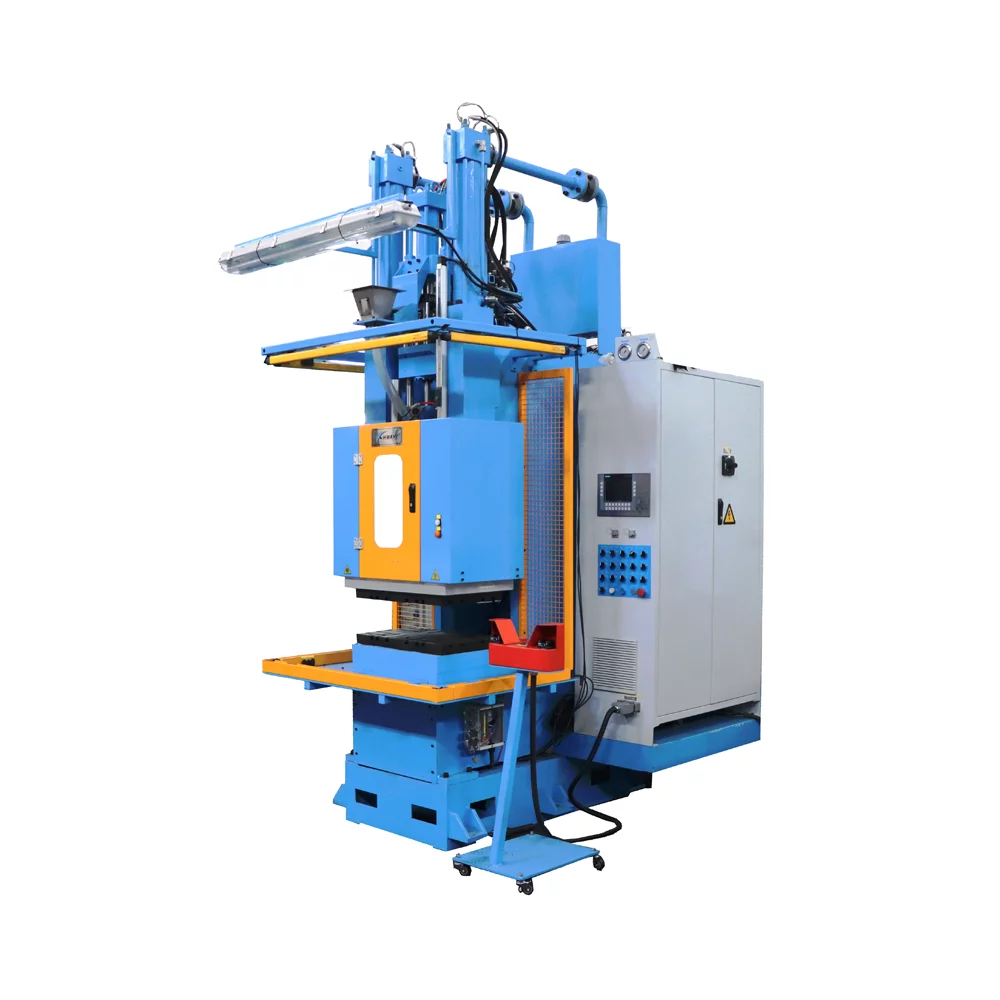
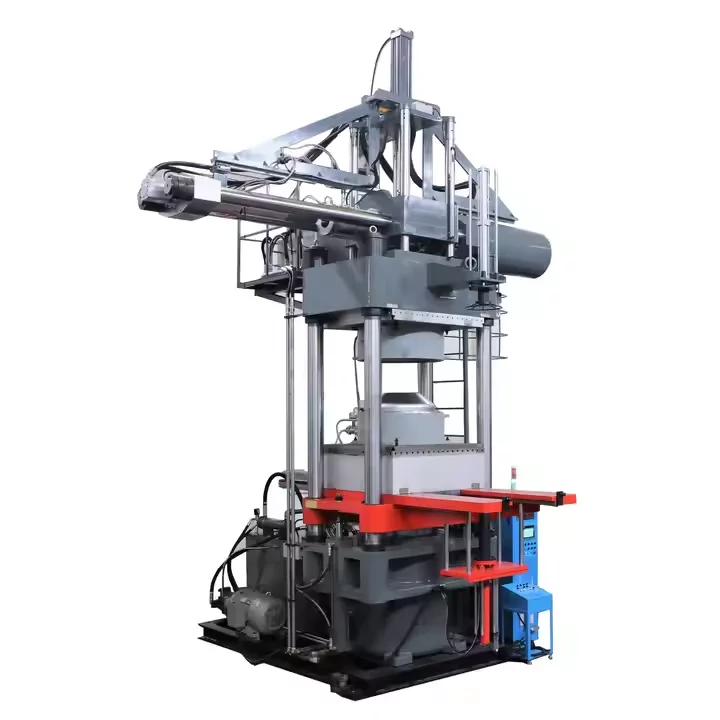
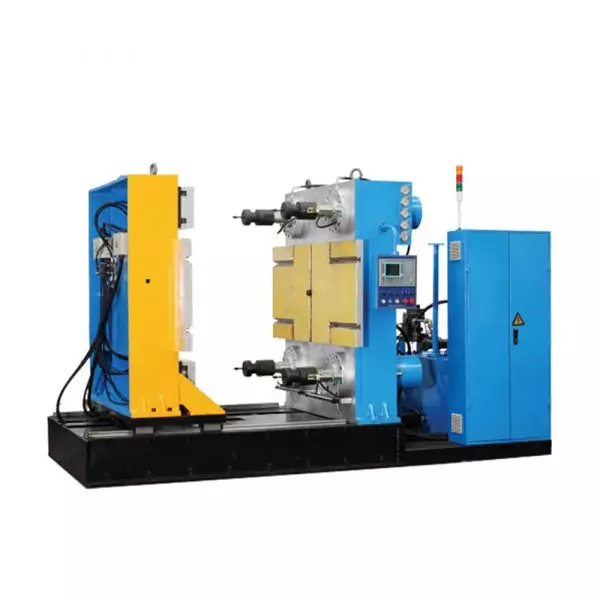
If you’re looking for a starting point, Hwayi’s Rubber Belt Track Vulcanizing Press is designed specifically for rubber track manufacturing, covering the full process from iron core winding and track forming through to vulcanization and automated transfer.
- High automation: Material loading, steel belt tensioning, and track removal are handled automatically or semi-automatically
- Flexible installation: A telescopic fast-clamping design lowers the operation height to suit different facility layouts
- Energy efficiency: Hydraulic pump adjusts consumption dynamically during curing, keeping clamping force stable while eliminating unnecessary energy loss
- Precise hydraulic control: Pump flow adjustable from 0 to 100% across multiple actions
- Extended product lifespan: Optimized clamping and tensioning interaction improves belt track service life by up to 50%
- Smart quality control: B&R control system with automatic data adjustment, saving, and production monitoring to support ongoing quality improvement
→Get more details about Hwayi
Conclusion
As rubber tracks continue replacing steel systems in modern machinery, efficient production depends on a reliable rubber vulcanizing press. Hwayi’s rubber track vulcanizing solutions help manufacturers improve product quality, automation, and production efficiency.
Contact us to explore the right rubber vulcanizing press for your track manufacturing needs.