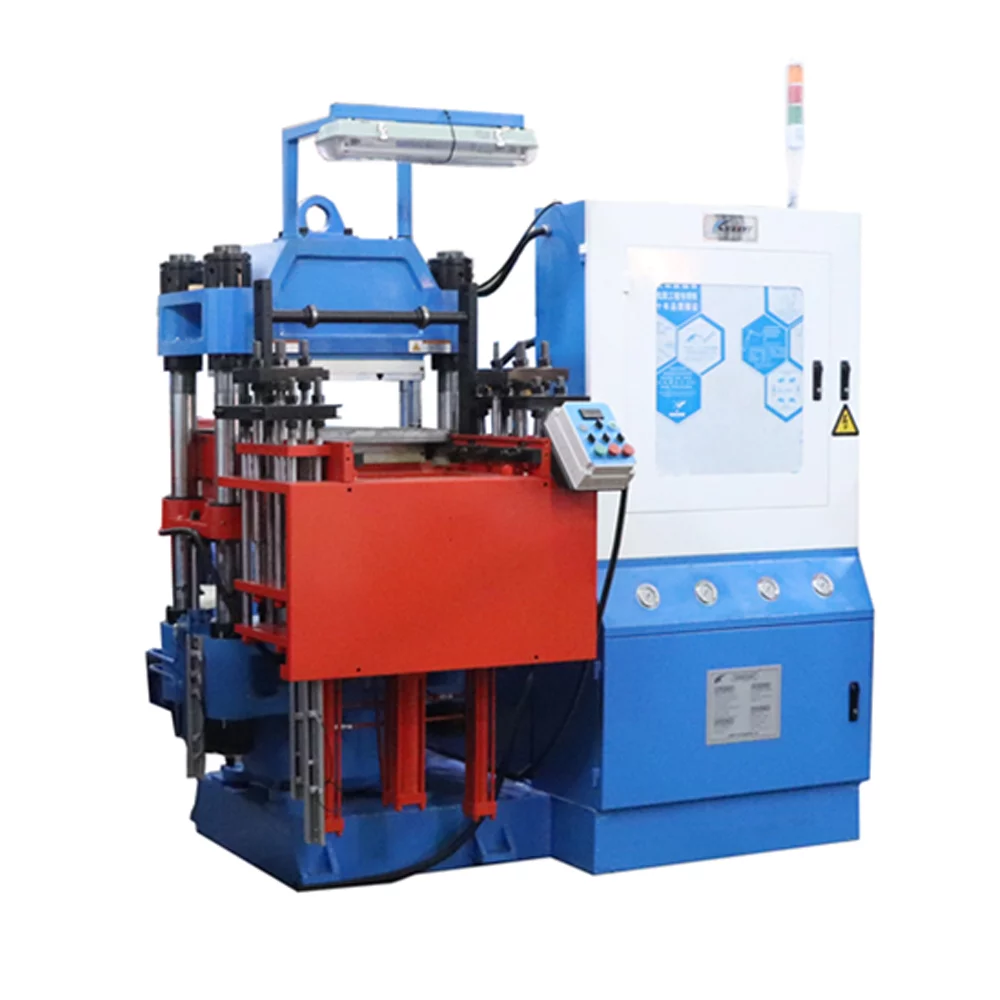
Achieving consistent physical properties across thousands of consecutive production cycles represents the ultimate standard in modern elastomeric component manufacturing. Minor variances in cycle timing, operator handling, or material distribution can degrade physical properties and create hidden internal defects. Implementing rubber molding solutions with automated control systems helps stabilize key processing variables.
When human interaction is minimized at critical production stages, the micro-climate within the mold tooling stays exceptionally stable. This stability directly prevents common quality failures such as short shots, air entrapment, and dimensional variance. By focusing heavily on the physical variables that dictate molecular cross-linking, manufacturing plants can ensure flawless part-to-part replication over extended shifts.
Our development engineering team at HWAYI studies these complex processing mechanics to remove human error from the factory floor. By integrating smart sensor arrays and robust mechanical handling with precision fluid power, we help operations secure unmatched quality consistency.
Thermal Equilibrium and Mitigating Open Tool Heat Dissipation
Maintaining a stable thermal profile across the tool face is mandatory for achieving predictable vulcanization chemistry. Every time an operator manually pries a cured component out of a cavity, the mold remains open, allowing massive heat energy to escape.
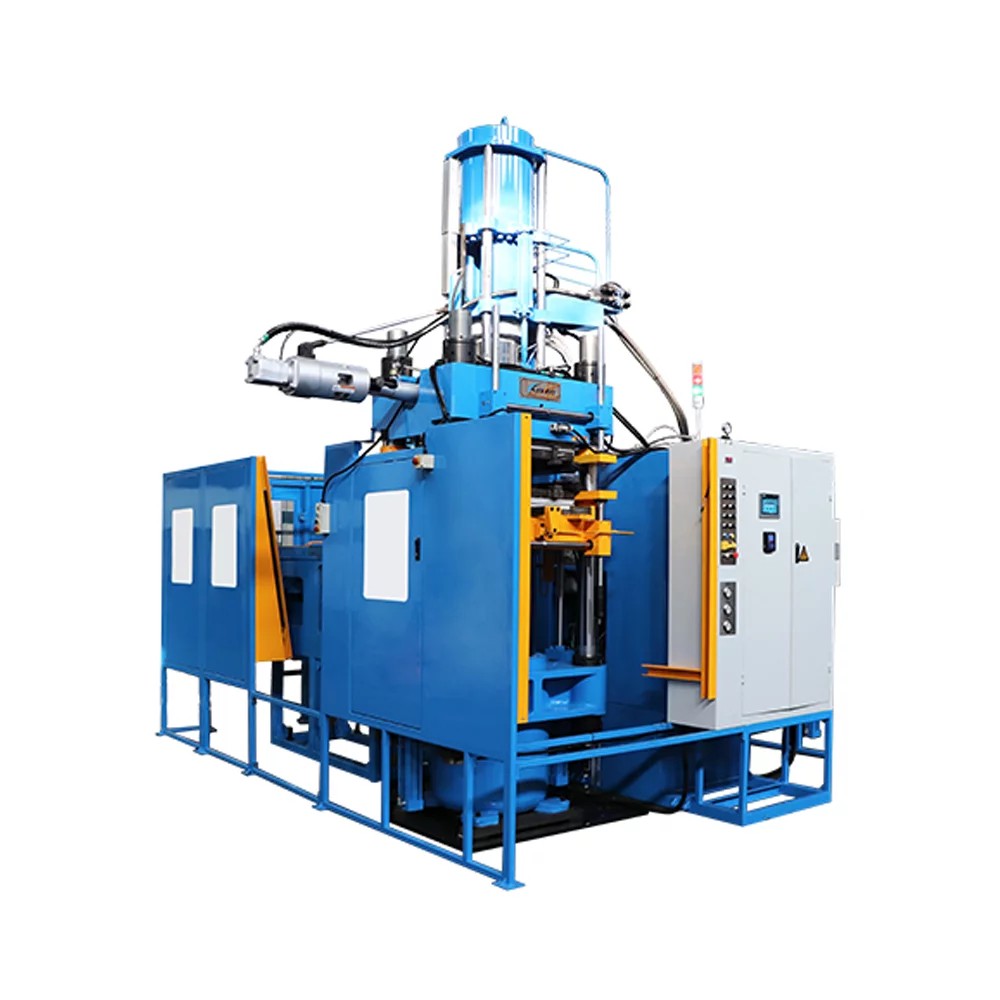
This localized cooling forces the primary heating elements to spike unevenly, creating subtle thermal gradients that lead to inconsistent cross-linking states. Mechanized extraction devices solve this problem by clearing the tool face within a fraction of a second, keeping the open-tool window brief.
Minimizing open-mold time limits radiant heat loss from the cavity, supporting highly repeatable temperature conditions for the subsequent shot. At HWAYI, we design our automated stripping interfaces to sync smoothly with the main clamp hydraulics to preserve this vital thermal balance.
Volumetric Shot Accuracy and Digital Transducer Controls
Variations in compound dosage generate structural instability, resulting in either excessive flash waste or incomplete filling defects. Manual raw material strip feeding can slip or hitch, causing unpredictable volumetric changes from one cycle to the next.
Advanced injection molding automation solutions address this issue by tracking the screw position continuously using high-resolution digital linear transducers. The system monitors screw position and stops the plasticization process when the preset shot volume is reached.
This exact volumetric control prevents over-packing the mold layout, which protects thin parting lines and preserves original part dimensions. We integrate these closed-loop tracking metrics into our machinery control software to help plants maintain zero-defect manufacturing standards.
Low Platform Ergonomics and Optimizing Daily Tool Interaction
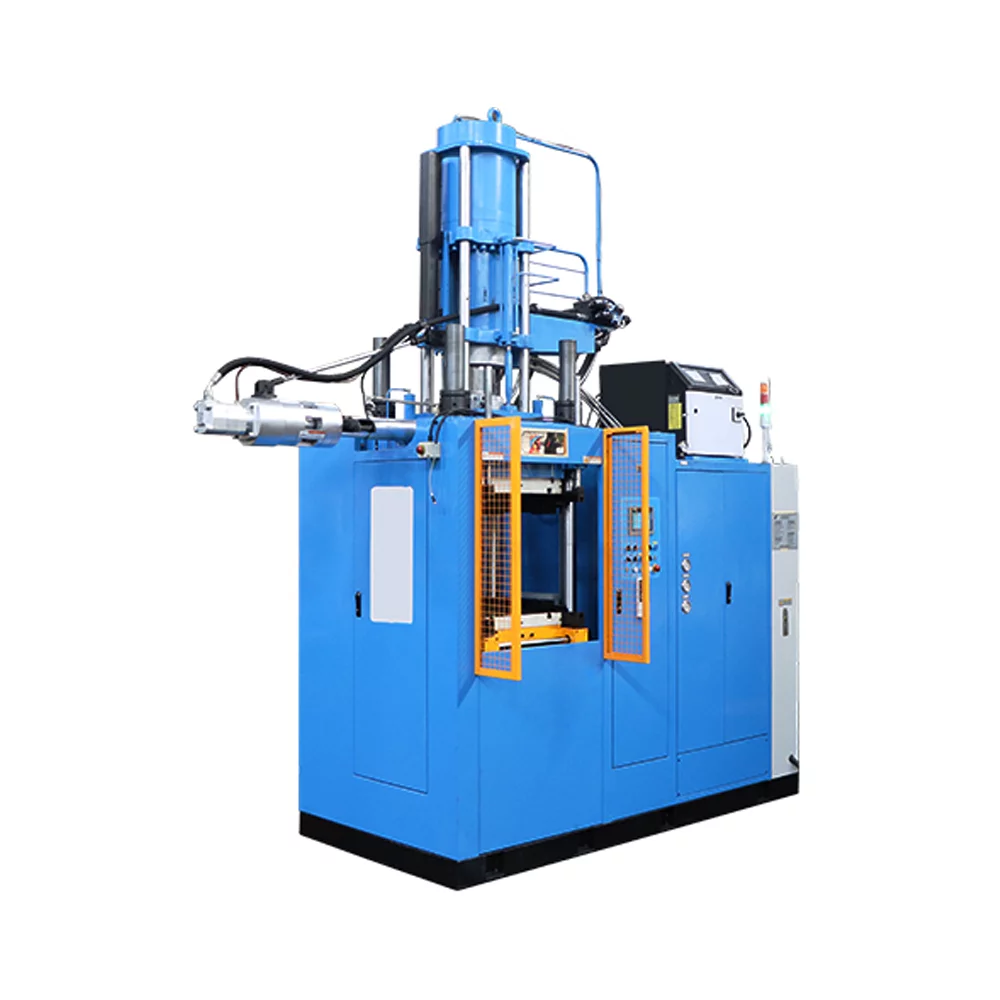
The physical height of a processing setup dramatically alters how easily and safely an operator can manage complex tooling sequences. Tall, poorly arranged machine platforms require operators to stretch awkwardly or use platforms to load inserts, which introduces physical fatigue.
Physical fatigue can contribute to variations in cycle timing during extended production shifts. Lowering the main operational deck height brings the tool parting line down to an optimal, highly comfortable working level.
This structural shift allows operators to inspect cavity pins and position wire inserts rapidly, smoothly, and without physical strain. Our design team focuses heavily on these ergonomic adjustments to keep process pacing predictable and uniform over long shifts.
Angled Injection Mechanics and Tie-Bar Structural Rigidity
Injecting dense elastomeric polymers into multi-cavity tools requires tremendous mechanical stability to prevent the press frame from flexing. If the clamping unit suffers from minor deflection under load, material escapes into the parting lines, ruining part uniformity.
Utilizing a robust four-column layout paired with an angle injection mechanism ensures that mechanical force transfer straight along the center axis. This geometric configuration distributes extreme pressures completely evenly across the entire surface area of the tool plates.
Preventing structural shifting under pressure is essential for avoiding localized flashing and keeping tight component tolerances secure. At HWAYI, we construct our machine chassis using heavy-gauge steel weldments to withstand continuous high-tonnage cycling while reducing the risk of mechanical fatigue during continuous operation.
Expanded Structural Travel for Complex Composite Components
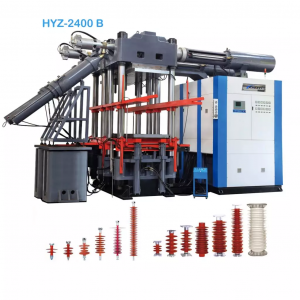
Utility-grade electrical infrastructure items, such as composite insulators, arresters, fuse cutouts, and large bushings, demand heavy material shots and complex tooling. These components feature deep profiles and long structural cores that require substantial physical clearance to demold safely.
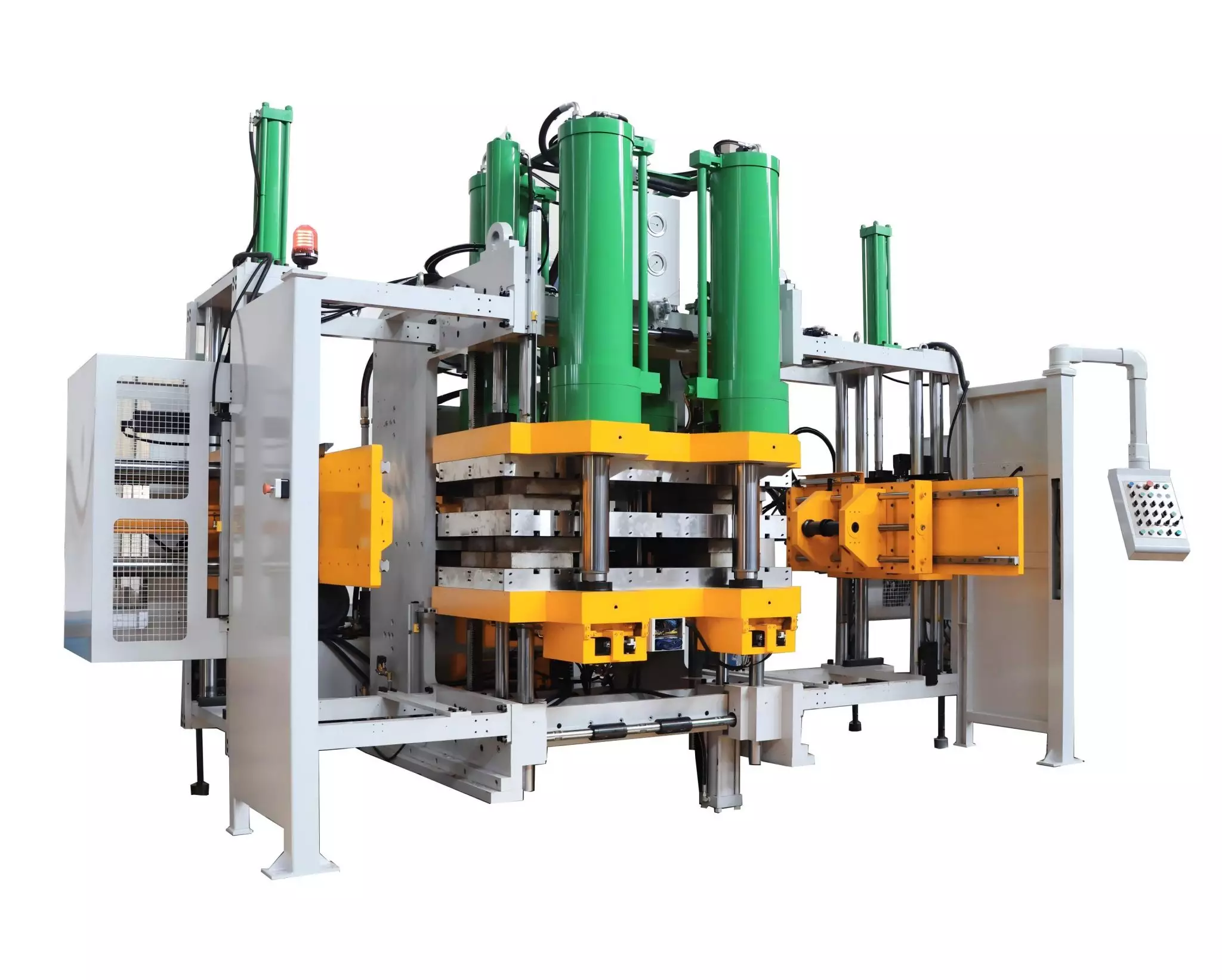
Standard machinery frames often lack the spatial clearance needed to split these multi-part molds without bending or marring the soft rubber. Providing an expanded clamping stroke enables operators to extract deep-draw components cleanly without placing stress on fragile edges.
Our Composite Insulator Rubber Injection Molding Machine features this expanded stroke capability to accommodate large-volume industrial tools seamlessly. This specialized HWAYI rubber machine setup gives production crews the physical clearance needed to handle complex insulation components safely.
Cold Runner Integration and Sustainable Waste Reduction Channels
Conventional hot runner delivery paths leave thick, cured sprues and runner scrap that must be discarded after every single cycle. This wasted material represents a massive financial drain and can disrupt automated extraction lines if the scrap breaks off inside the tool.
Integrating a modern cold runner system keeps the compound inside the primary distribution channels fluid and ready for the next shot. This design significantly reduces cured runner scrap, maximizing material efficiency and streamlining the automated demolding phase.
Choosing these runnerless systems simplifies part extraction because the handling mechanics only need to grab the functional parts. We closely analyze these fluid distribution pathways when customizing precision tooling layouts to allow our partners to maximize their material investments.
Conclusion
Leveraging robust automation and advanced process controls is the most reliable strategy for achieving absolute component consistency in high-volume manufacturing. By stabilizing tool temperatures, ensuring precise volumetric shots, and choosing ergonomic, rigid machine frames, facilities remove the variables that cause quality defects.
Investing in specialized structural setups, such as angle injection configurations and cold runner delivery systems, helps plants maximize material yield. Prioritizing these data-driven design elements results in predictable cycle times, reduced scrap overhead, and excellent part uniformity across demanding industrial operations.