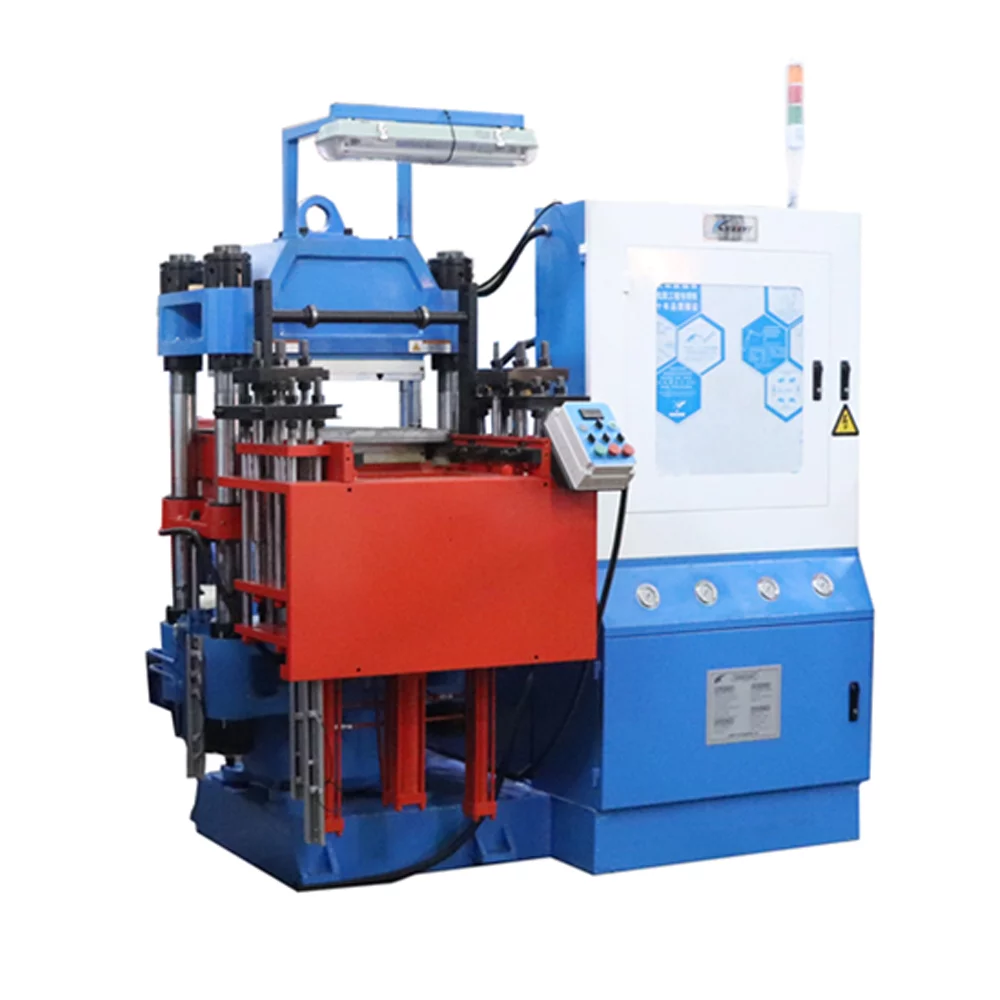
Industrial conveyor networks rely heavily on the seamless continuity of reinforced elastomeric bands to transport massive bulk materials without interruption. Splice failures often trace back to microscopic structural flaws created during the final thermal transition stage of the vulcanization process. Ensuring a controlled, uniform temperature reduction inside a heavy-duty rubber belt vulcanizing machine is a critical factor in achieving maximum joint longevity.
Improper thermal management during this critical phase can induce severe internal stresses, leading to premature delamination or localized cracking under high operational tension. Engineering teams must carefully isolate how cooling rates alter the polymer matrix to prevent unexpected structural shifting. Developing a predictable, repeatable thermal reduction protocol ensures that manufacturing plants avoid costly field failures and maintain high operational reliability.
At HWAYI, our material science engineers study these intricate molecular changes closely to optimize physical curing and solidification cycles. By matching thermal mechanics with the natural crystallization behavior of the compound, we assist operations in achieving highly uniform results.
The Molecular Mechanics of Elastomeric Polymer Stabilization
Vulcanization permanently alters the internal molecular architecture of raw rubber by creating robust sulfur cross-links between independent polymer chains. However, the completion of the heating cycle does not mean the chemical configuration is instantly locked into its final stable shape.
If a cured splice is released from the press while the internal temperature remains too close to the vulcanization threshold, the hot polymer chains can slip. This microscopic slipping significantly weakens the structural bond, lowering the ultimate tensile strength of the complete joint footprint.
Allowing the material sufficient time to cool below its thermal transition window guarantees that the cross-linked network locks firmly in place. This stabilization phase prevents dimensional distortion when the heavy mechanical clamping pressure is eventually vented from the system.
Controlling the Rate of Thermal Contraction and Internal Stress
Elastomeric compounds and internal steel reinforcement elements exhibit drastically different rates of thermal contraction as they lose heat energy. Rapid temperature drops cause the outer rubber layer to shrink much faster than the dense internal steel cord matrix.
This thermal gradient creates immense localized shear stress directly along the critical bonding interface where the rubber grips the metal components. Over time, these pocketed internal stresses manifest as micro-fractures that compromise the structural integrity of the entire conveyor line.
A gradual, monitored reduction in platen temperature allows these diverse materials to contract at a balanced, non-destructive pace. Our technical group emphasizes this controlled ramp-down to minimize internal micro-tearing and optimize long-term splice performance.
Managing Trapped Gases and Void Formation Risks
Residual volatile components and atmospheric gases remain trapped under immense pressure inside the vulcanizing chamber during the high-heat curing stage. If the mechanical clamp opens prematurely while the compound is hot and soft, these compressed gases will instantly expand.
This sudden expansion creates microscopic voids or spongy porosity defects directly inside the joint body, ruining the consistency of the bond. Keeping the tool securely clamped during a deliberate cooling sequence forces these gases to remain safely compressed until the matrix hardens.
Once the elastomer drops below its softening point, its increased physical resistance prevents any trapped micro-bubbles from expanding. Utilizing a rigid belt vulcanizing press system maintains stable physical containment throughout the temperature reduction phase.
Optimizing Platen Water Cooling Flow Architectures
Achieving a uniform temperature reduction across a massive mechanical platen requires an engineered internal fluid path that prevents localized hot spots. Cold water must flow through the internal channels at a calculated velocity to pull heat away evenly from center to edge.
If the cooling water moves too slowly, it absorbs maximum heat early in the circuit, leaving the exit side of the platen dangerously hot. This imbalance creates a severe thermal gradient across the splice zone, causing one side of the joint to cool faster than the other.
Implementing highly balanced fluid distribution manifolds facilitates a simultaneous transition of the entire tool face through the temperature zones. We incorporate highly precise fluid control configurations into our equipment layouts to guarantee this necessary thermal uniformity during high-throughput runs.
Maximizing Tension Control and Structural Steel Belt Alignment
The production of heavy reinforced tracking elements requires immense tension management alongside strict thermal control to prevent tracking skewness. If the underlying reinforcing structure shifts even slightly during the cooling phase, the physical tracking properties of the belt are permanently ruined.
Automation helps eliminate this human error by constantly regulating physical tension parameters as the polymer cools and hardens. Automated systems track the dimensional changes of the curing band in real-time, adjusting the mechanical holding fixtures to compensate for thermal shrinkage.
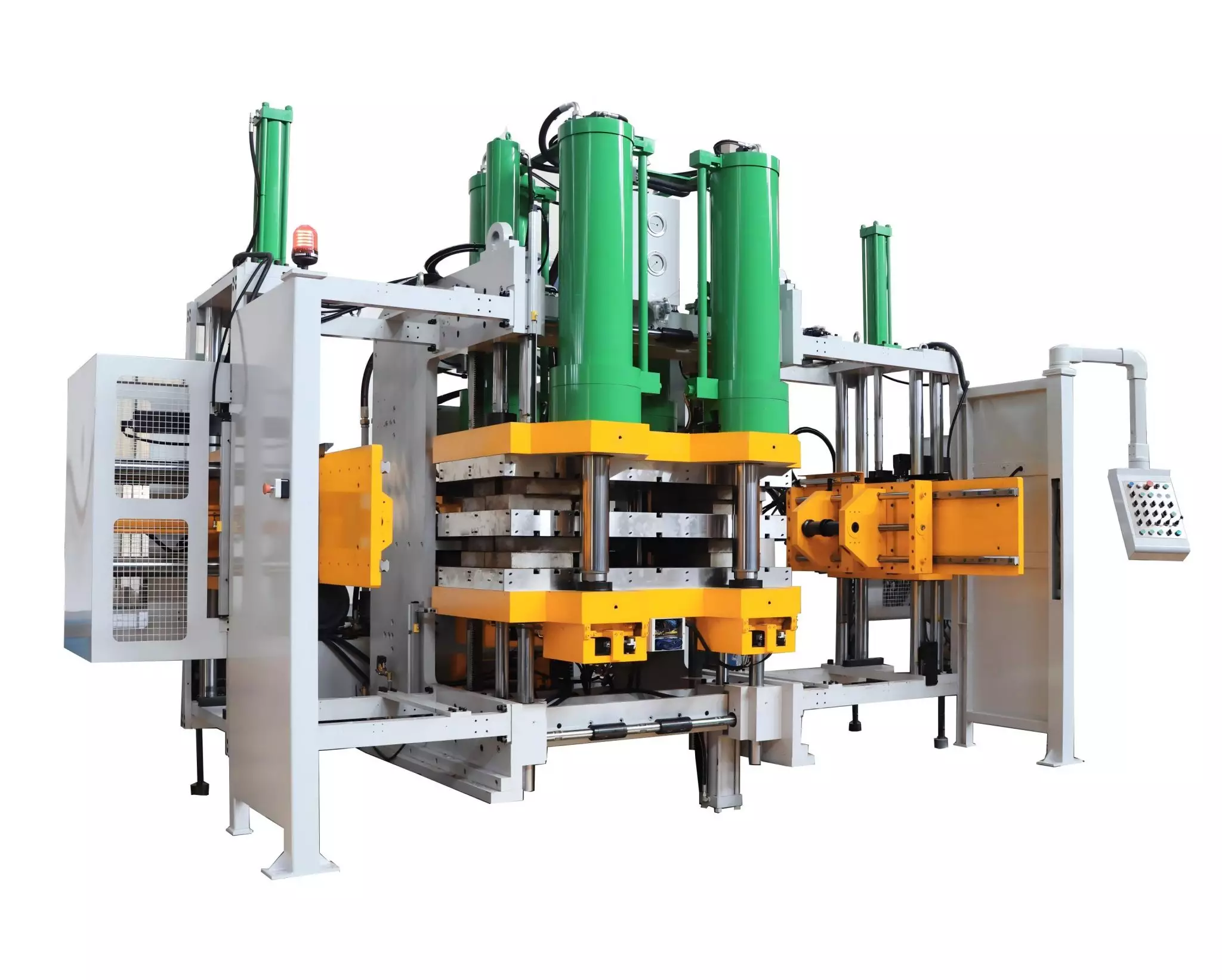
Our automated HWAYI rubber machine designs integrate advanced positioning features to maintain this exact geometric alignment without operator intervention. The high automation architecture automatically loads raw rubber material and tensions the steel belt, while facilitating semi-automatic track unloading.
Enhancing Installation Flexibility in Complex Plant Layouts
Deploying massive vulcanization hardware inside tight, established industrial footprints often introduces severe spatial and operational challenges for engineering crews. Floor space restrictions can complicate both the initial machine setup and the routine mechanical movements required for daily production sequences.
Addressing these tight environments demands creative machinery designs that minimize the physical clearance needed to load and unlock heavy tools. Reducing the physical footprint of the clamping unit allows plants to place advanced vulcanization technology directly into existing processing lines.
To solve these spatial bottlenecks, we apply a special telescopic design directly onto the fast clamping device of our heavy machinery. This innovative mechanical architecture efficiently decreases the overall operation height, making the system significantly easier to install and operate across diverse production environments.
Evaluating the Impact of Ambient Temperature Fluctuations
External factory floor conditions can introduce unpredictable variables into the cooling curve if the machinery lacks proper thermal isolation. A cold winter draft or an air conditioning duct blowing directly onto a hot platen can cause uneven cooling.
These external variations disrupt the calculated cooling curve, leading to unexpected variations in joint strength between different shifts. Processing engineers must track these ambient shifts and utilize insulated guarding to shield the open platens from external air currents.
Using integrated digital sensors allows the machine logic to adapt cooling water flow rates based on real-time environmental data. We focus on building resilient control frameworks that isolate the process from these variable external plant conditions.
Validating Joint Consistency Through Non-Destructive Testing
Confirming that a cooling cycle was executed successfully requires rigorous quality inspection protocols before the belt enters active service. Non-destructive testing methods, such as ultrasonic scanning, allow technicians to look directly inside the cooled joint matrix.
These scans reveal hidden internal voids, delamination zones, or reinforcement displacement caused by improper thermal management or premature pressure release. Tracking these inspection metrics gives plant managers empirical proof that their cooling parameters are correctly optimized.
Establishing a strict correlation between cooling time data and ultrasonic clarity helps zero-defect manufacturing over thousands of production cycles. Our technical support specialists stay committed to helping facilities implement these data-driven validation frameworks on the shop floor.
Conclusion
Managing the cooling profile is a mandatory requirement for achieving consistent, high-strength joint integrity in industrial belt manufacturing. By regulating polymer stabilization, minimizing internal thermal stresses, and utilizing highly automated tension systems, operations can eliminate unpredictable splicing failures.
Investing in advanced machinery features, such as low-profile telescopic clamping mechanisms and automated material handling, significantly simplifies installation while boosting processing control. Prioritizing strict thermal management helps achieve maximum asset protection, minimal compound waste, and highly reliable conveyor performance under the most demanding industrial conditions.