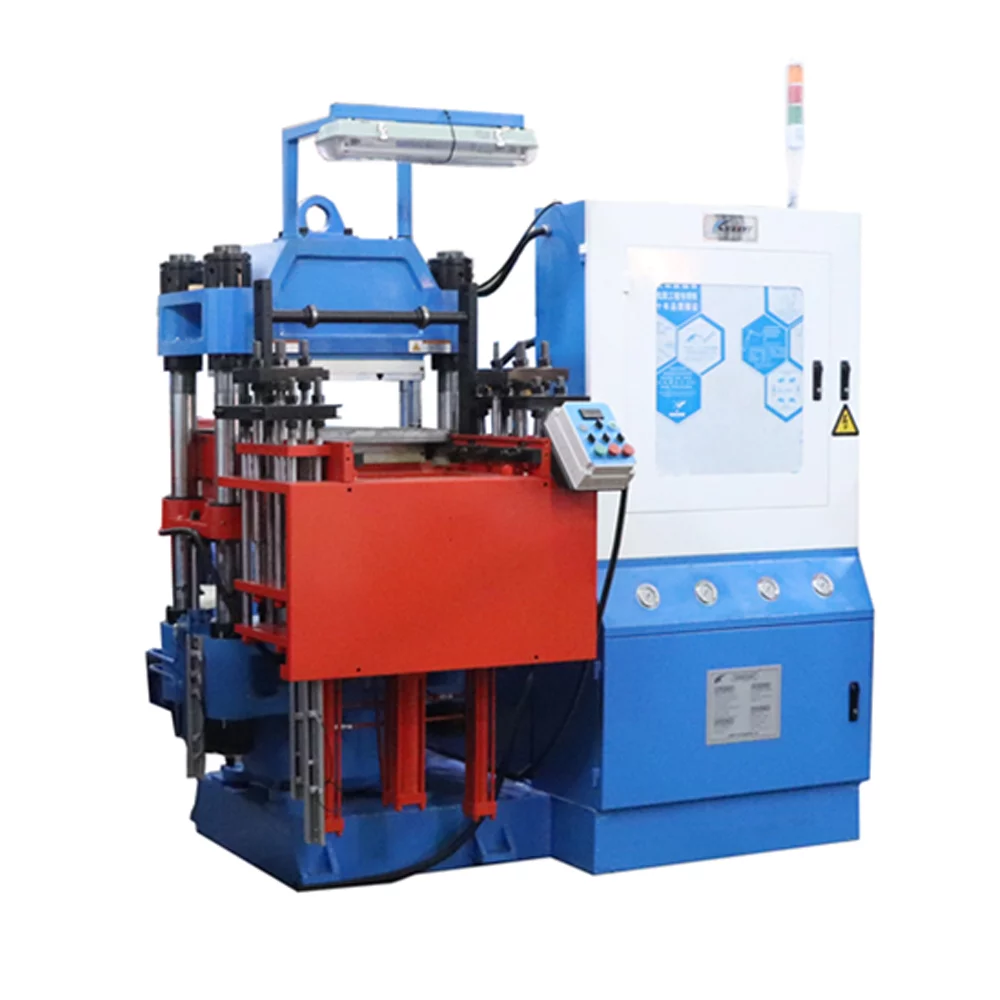
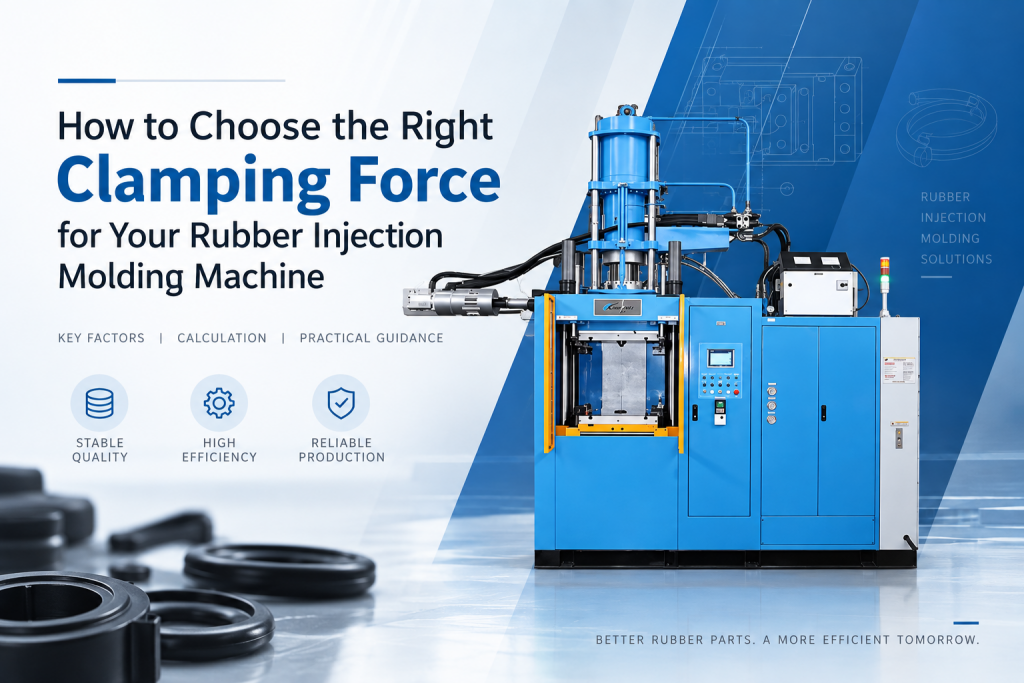
In rubber injection molding, clamping force plays a critical role in keeping the mold securely closed during injection and ensuring stable part quality. If it’s too low or too high, it can lead to defects, mold wear, and inefficient production. Understanding how clamping force works, how it is calculated, and how it affects machine selection is essential for choosing the right equipment.
What Is Clamping Force?
In this process, clamping force is the mechanical force applied by the machine’s platens to hold the mold halves together during injection and curing. It counteracts the internal pressure generated when rubber compound fills the mold cavity. Without adequate clamping force, the mold may separate, allowing material to escape along the parting line and causing flash or incomplete fills.
Clamping force is typically expressed in kilogram-force (kgf), kilonewtons (kN), or metric tons (ton). The required value depends on the projected area, the number of cavities, and the expected cavity pressure.
Clamping Force vs. Injection Pressure vs. Cavity Pressure
These three parameters serve distinct functions in the process. Understanding their differences helps engineers and procurement teams select the right rubber injection machine for a given application.
Clamping Force | Injection Pressure | Cavity Pressure | |
What It Means | Force keeping the mold closed | Pressure pushing rubber into the mold | Pressure inside the cavity during fill |
Where It Acts | Mold platens (external) | Injection nozzle and runner system | Cavity walls and parting surfaces |
Typical Unit | kgf, kN, or ton | MPa, bar, or psi | MPa, bar, or kgf/cm² |
Main Function | Prevents mold separation | Drives compound through sprue, runners, and gates | Determines fill quality and surface finish |
If Too Low | Mold separation risk, compromising seal and fill | Short shots, poor surface detail | Voids, sink marks, poor knit lines |
If Too High | Increased system load and energy use | Shear heat degradation, gate damage | Over-packing, internal stress, demolding difficulty |
Clamping Force and Machine Tonnage
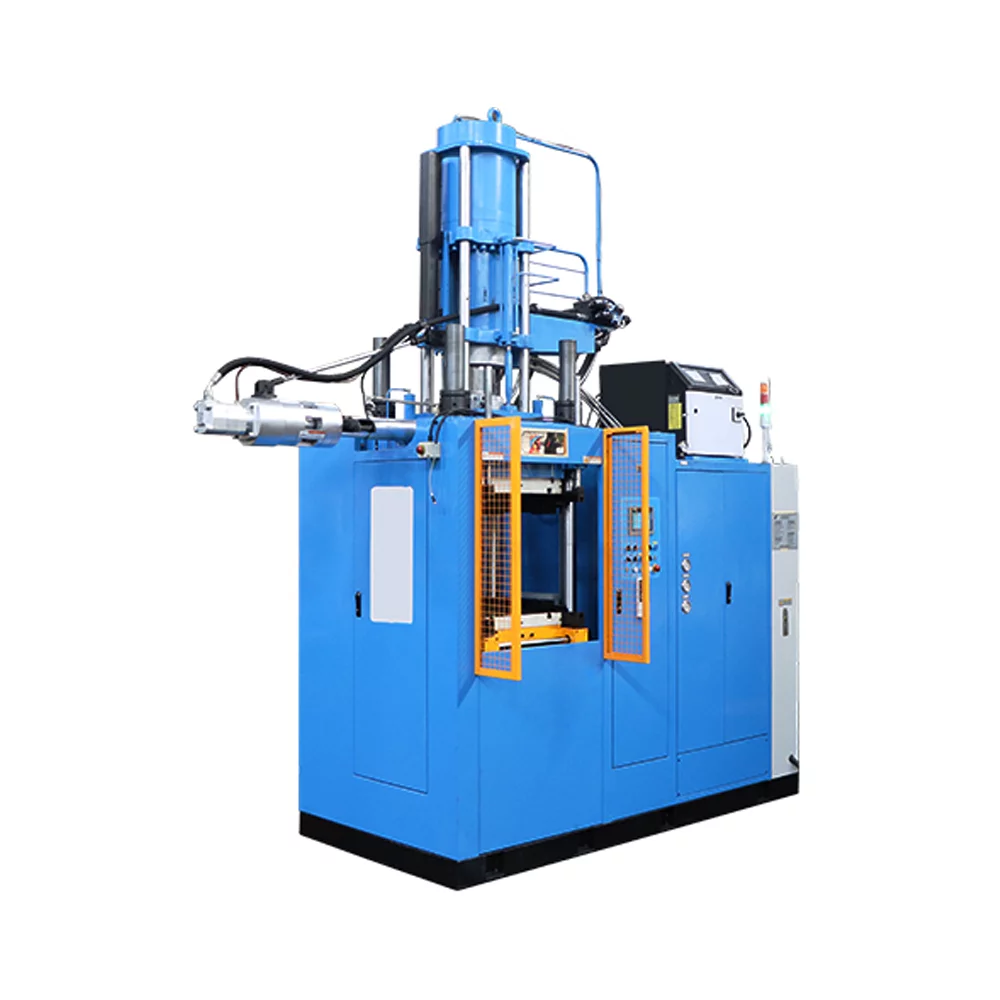
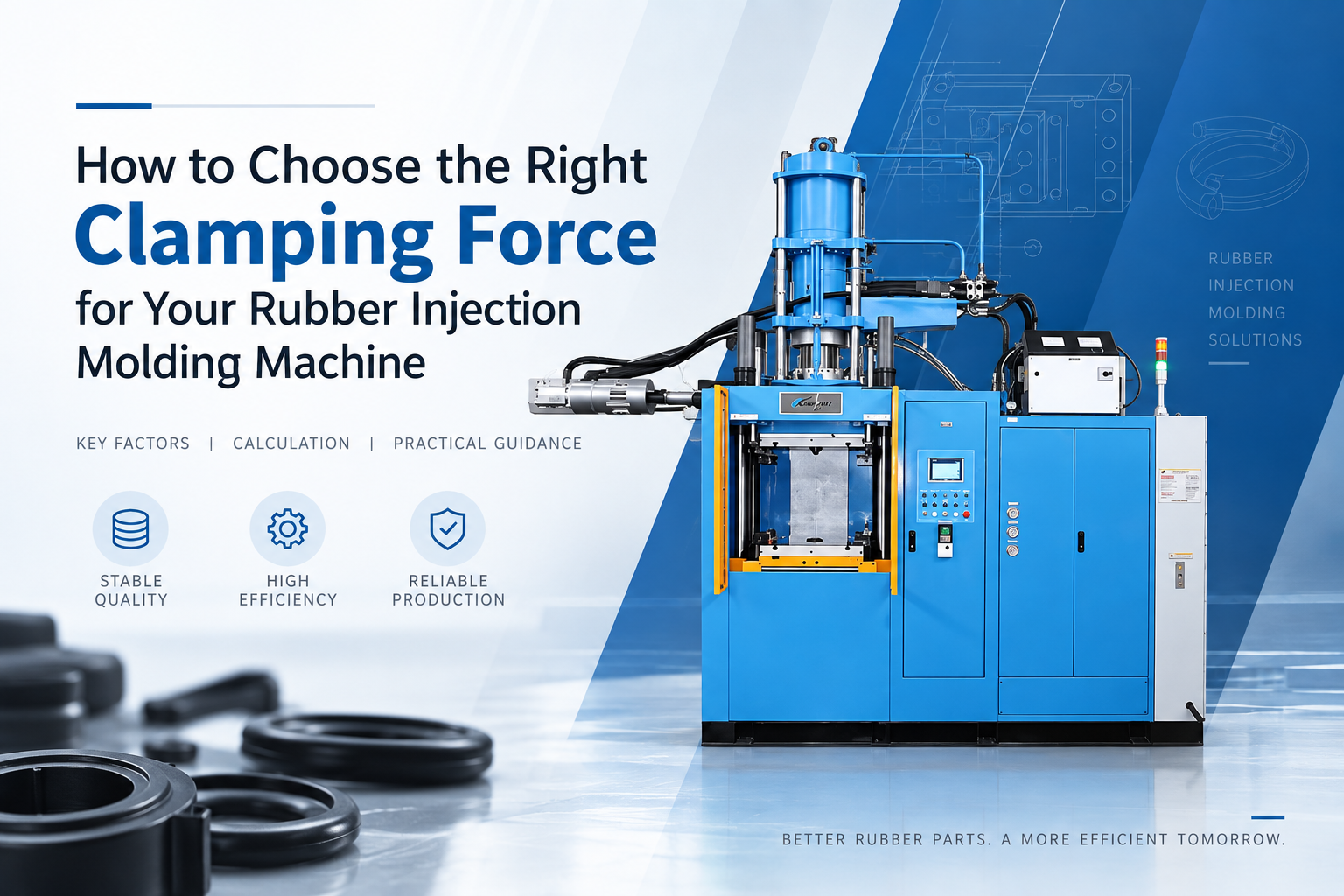
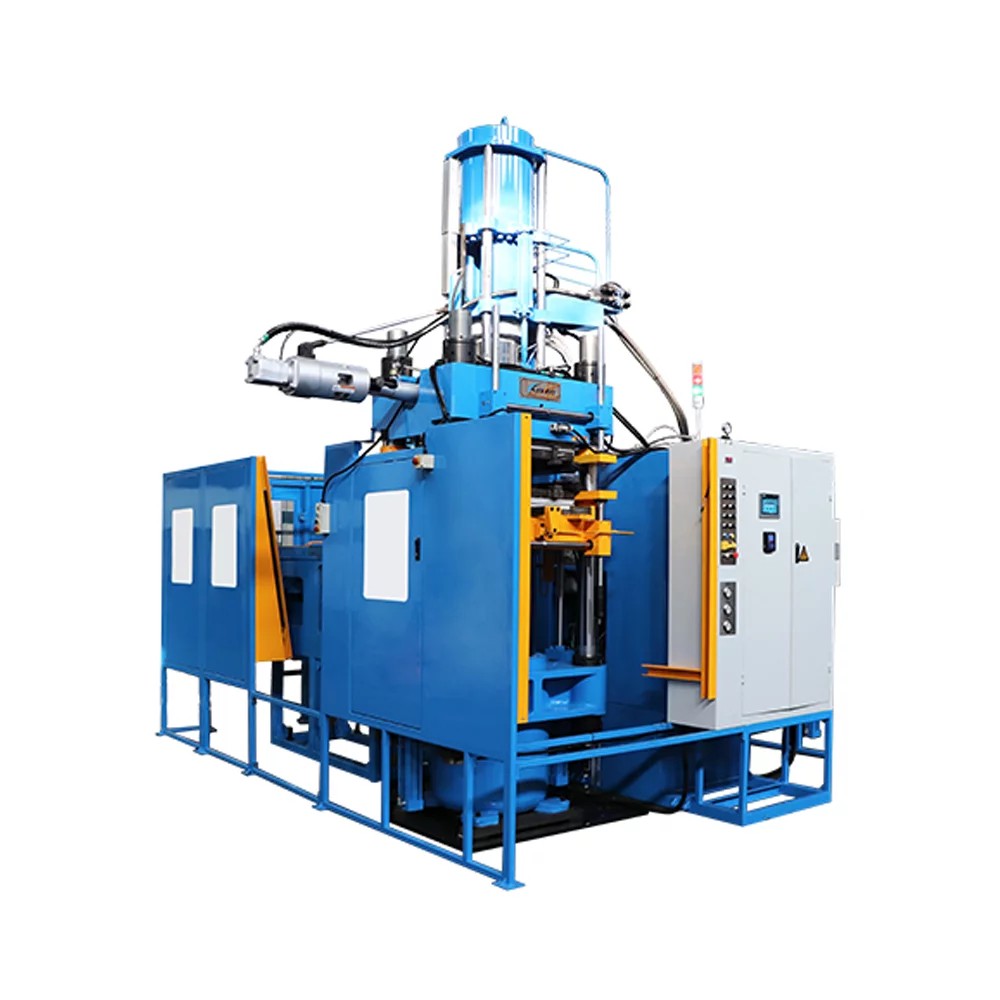
When selecting a machine — such as the Hwayi HYZ-E Series vertical rubber injection molding machine — tonnage represents the maximum clamping force it can deliver. This should remain well below the rated tonnage: running near maximum capacity accelerates wear, while over-sizing raises capital and energy costs. Matching clamping force to tonnage directly affects efficiency and part quality in any rubber injection molding operation.
What Happens When Clamping Force Is Incorrect?
Getting it wrong — whether insufficient, excessive, or uneven — leads to distinct problems in production.
Insufficient Clamping Force
When cavity pressure across the projected area exceeds the clamping force, the mold halves begin to separate. Even a tiny gap allows rubber to escape along the parting line.
Beyond immediate flash, repeated leakage erodes the parting surface, shortening mold life and creating a worsening quality cycle.
Excessive Clamping Force
Many operators over-clamp to prevent flash, but this shifts stress onto the machine and mold, accelerating wear on guide pins, parting surfaces, and platen faces.
It also raises hydraulic demand and energy consumption without improving quality. Cumulative stress may cause platen deflection over time.
Uneven Clamping Force
Unlike the first two scenarios, uneven distribution is often a hidden problem. Common causes include worn tie bars, misaligned platens, or improper mold mounting.
Some cavities become under-clamped while others are over-clamped — producing flash and short shots simultaneously. Adjusting the overall force cannot resolve a distribution problem, and the imbalance progressively worsens wear on the machine.
Comparison: Insufficient vs. Excessive vs. Uneven Clamping Force
Insufficient | Excessive | Uneven | |
Common Defects | Heavy flash, short shots, dimensional inconsistency | Over-packed parts, stress marks, demolding difficulty | Flash in some cavities, short shots in others |
Mold & Machine Impact | Parting line erosion, mold insert damage | Guide pin and platen wear; possible platen bending | Localized mold wear, uneven tie bar stretch |
Production Impact | Higher scrap rate, extra deflashing labor | Higher energy costs, shortened service life | Inconsistent quality across cavities, process instability |
How to Identify | Flash on most parts, underweight parts | Difficulty opening mold, high power draw | Uneven flash pattern, tie bar strain imbalance |
Routine monitoring through tie bar strain measurement or pressure sensors can catch these issues before they cause costly downtime.
How to Calculate the Required Clamping Force
Calculating it before production helps prevent defects and ensures the rubber injection molding machine matches the job.
Step 1: Calculate the Total Projected Area
Measure the projected area of the part from the mold’s closing direction. For multi-cavity molds, multiply the single-part projected area by the number of cavities:
Total Projected Area = Single Part Projected Area × Number of Cavities
Step 2: Determine the Expected Cavity Pressure
Refer to the rubber compound supplier’s material datasheet or process records from similar production jobs to obtain the expected cavity pressure value for the application.
Step 3: Apply a Safety Factor
Multiply the result by a safety factor to account for pressure spikes, material viscosity variations, and process fluctuations. Select a higher factor for more complex parts or less stable processes.
Step 4: Convert to Machine Tonnage
Divide the final result in kgf by 1,000 to convert to metric tons. Compare this value against available machine tonnage ratings to select an appropriately rated model.
Formula:
- Required Clamping Force = Total Projected Area × Cavity Pressure × Safety Factor
Worked Example
Parameter | Value |
Single part projected area | 120 cm² |
Number of cavities | 4 |
Expected cavity pressure | 200 kgf/cm² |
Safety factor | 1.2 |
- Total Projected Area = 120 × 4 = 480 cm²
- Required Clamping Force = 480 × 200 × 2 = 115,200 kgf
- Convert to tonnage: 115,200 ÷ 1,000 ≈ 115 ton
A rubber injection molding machine with rated tonnage comfortably above this value would be recommended for optimal performance and longevity.
How to Use Clamping Force to Choose the Right Machine
Once the required clamping force has been calculated, the next step is selecting a machine that fits. The following points help guide the decision.
Match the Required Clamping Capacity
The machine’s rated tonnage should comfortably exceed the calculated clamping force. For the example above (115 ton required), the next available model up in the HYZ-E Series would be the HYZ-200E at 200 ton (2,000 kN), providing sufficient headroom to protect both the mold and the clamping system over long production runs.
Compare Clamping Force with Machine Tonnage
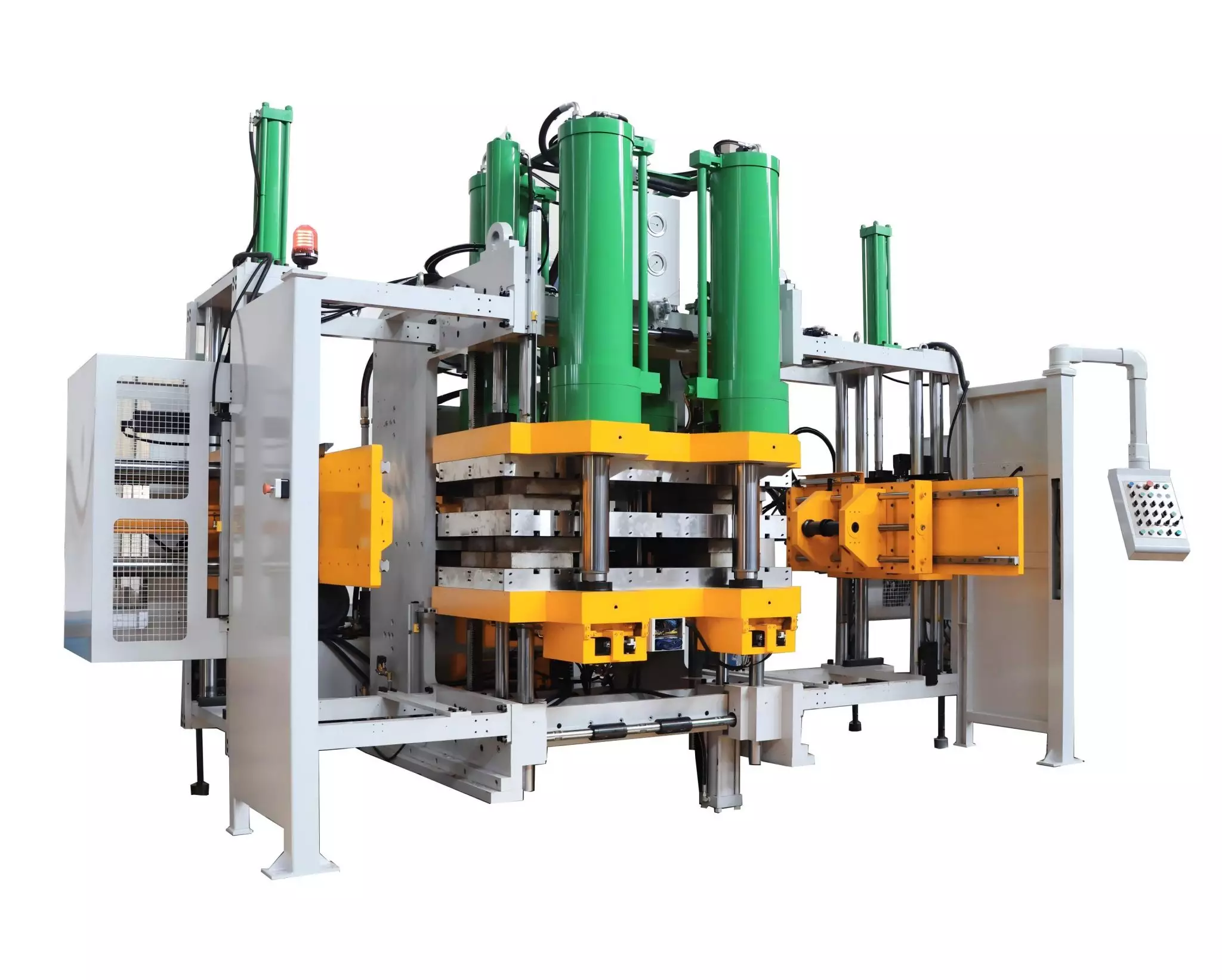
Clamping mechanism type (hydraulic vs. toggle), platen size, and clamping speed all affect real-world performance. The HYZ-E Series vertical rubber injection molding machine is available in multiple tonnage models from 50 to 600 tons, covering a broad range of production requirements without the need for custom configurations.
Confirm Mold Compatibility
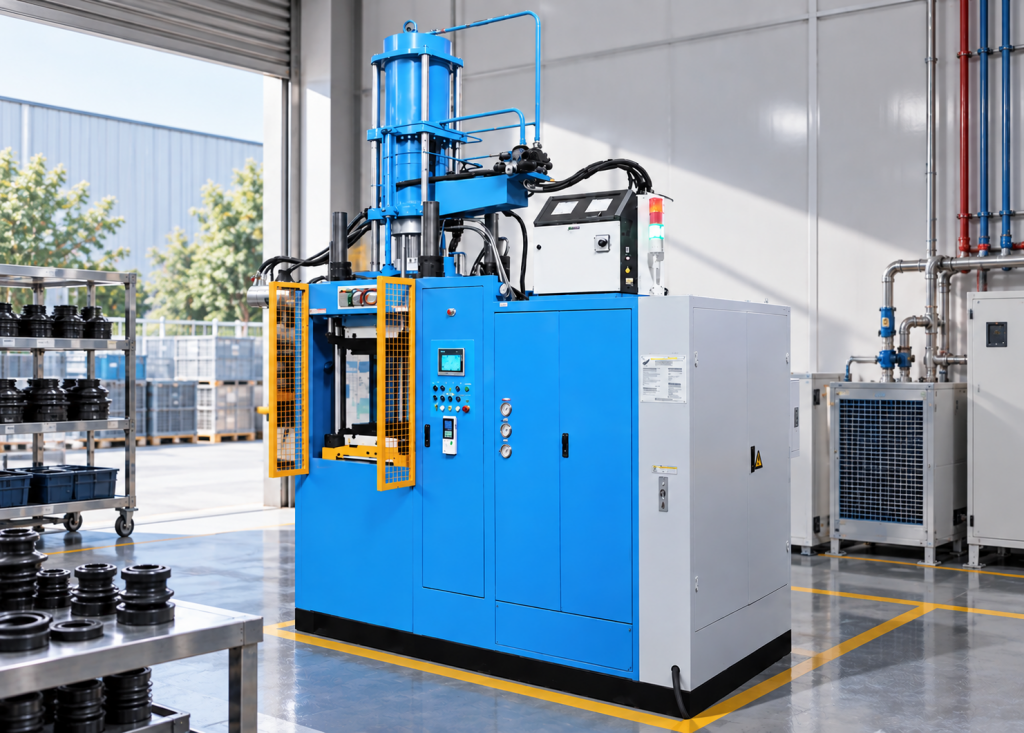
Beyond tonnage, verify that platen dimensions, tie bar spacing, and daylight opening can physically accommodate the mold. The HYZ-E Series features a four-column vertical structure with an optimized right-side layout, providing ample space for mold operation across the range of platen sizes used in rubber injection molding.
HYZ-E Series — Built for Flexible Rubber Injection Molding Requirements
For manufacturers seeking a reliable vertical rubber injection machine, the Hwayi HYZ-E Series is engineered to address the clamping force and process challenges discussed throughout this article.
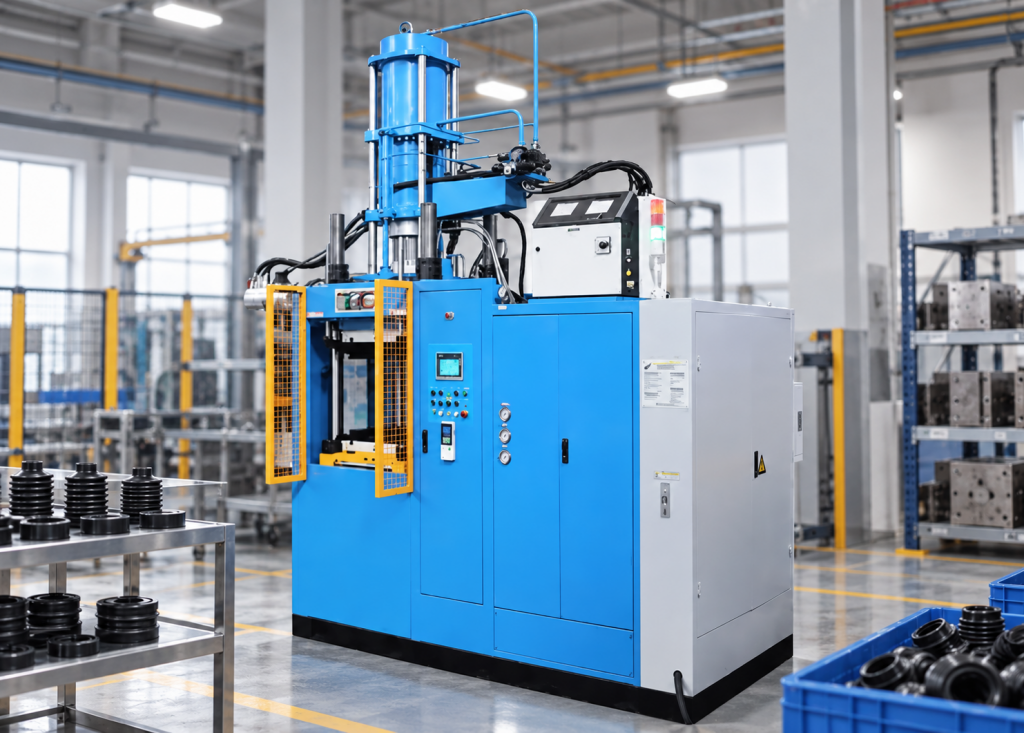
Key features of the HYZ-E Series include:
- Multiple tonnage models (50–600 tons):seven clamping force configurations from 500 kN to 6,000 kN to match diverse part sizes and cavity layouts
- High-stability clamping unit:four-column vertical structure delivers excellent parallelism, precision, and repeatability
- Multi-stage injection control: adjustable injection pressure and speed to suit various rubber compound and mold requirements
- Siemens electrical control with smart PLC: monitors the entire production process, stores up to 300 recipes, and supports USB data transfer
- Accurate temperature control:platen temperature tolerance within ±2°C with PID calibration for consistent molding quality
Whether producing automotive rubber parts, electrical insulation products, industrial seals, or small precision components, the HYZ-E Series provides the clamping capacity and process control needed for consistent, high-quality rubber injection molding output.
Get the Clamping Force Right — And Get Better Parts from Day One
Clamping force determines whether your mold stays sealed, your parts come out clean, and your equipment lasts. From understanding what it is, to calculating the right value, to selecting a machine that fits — every step matters. The Hwayi HYZ-E Series gives you the tonnage range, clamping stability, and process precision to get it right the first time.
Tell us your mold specs — get a free tonnage recommendation today.