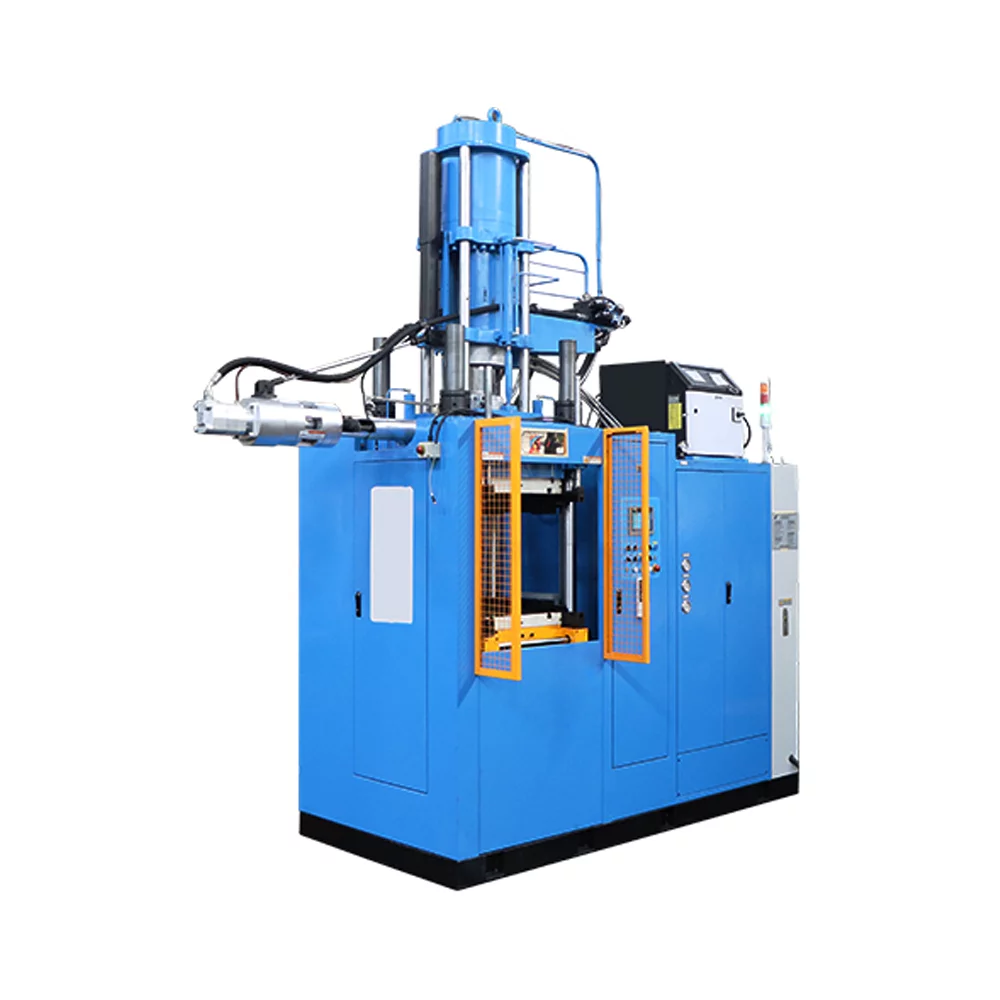
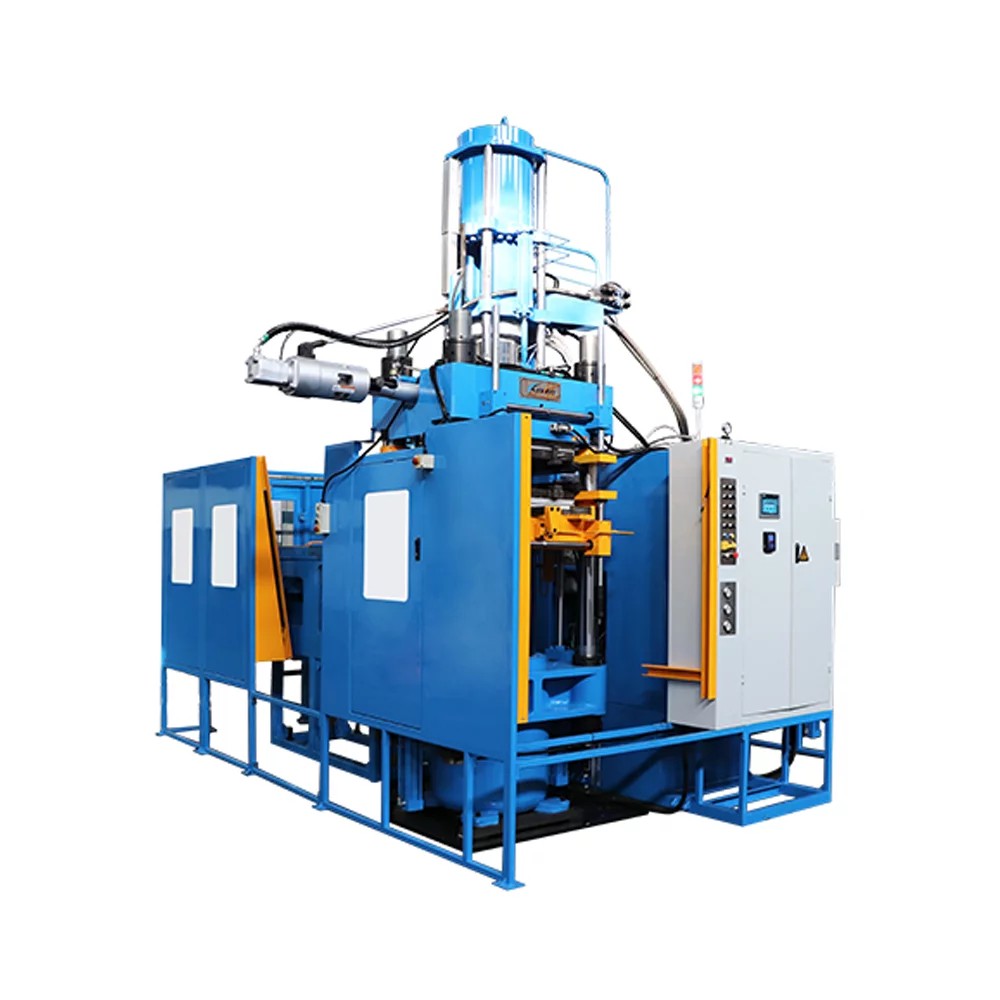
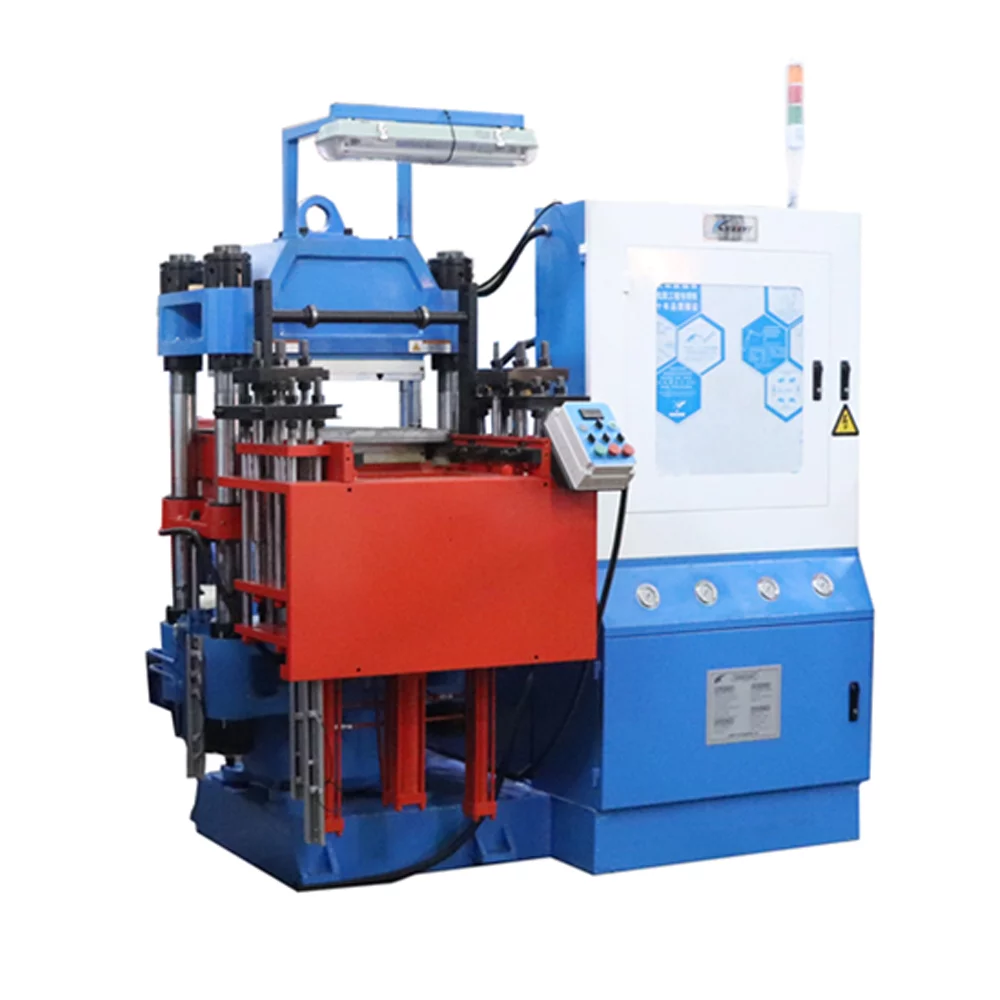
Continuous automated production in high-volume rubber manufacturing relies heavily on mechanical horizontal orientation for straightforward integration with automated material handling and stable clamping forces. Operating an industrial horizontal rubber injection molding machine enables plant engineers to achieve precise material distribution, controlled thermal cross-linking, and uniform part consolidation across long production runs. Our engineering team at HWAYI studies these core functional mechanics to help industrial processing facilities optimize operational output and equipment efficiency.
Horizontal machine layouts separate clamping and injection axes horizontally across the machine base, facilitating seamless integration with robotic pick-and-place systems or conveyor belt automation. Utilizing a heavy-duty horizontal injection molding machine provides processing plants with uniform force distribution across large mold plates, preventing mechanical distortion during high-pressure injection phases.
Precision Material Metering and Plasticizing Dynamics
Accurate material preparation is achieved through a plasticizing unit that supports multi‑stage injection speeds and pressure settings, ensuring consistent compound delivery under controlled thermal conditions. Controlled shear friction converts solid compound strips or liquid silicone feeds into uniform viscous fluids without triggering premature vulcanization.
Consistent volumetric shot sizes ensure uniform cavity fill, helping to minimize part-to-part weight variation across cavities. Precise displacement control regulates fluid flow velocity, enabling viscous compounds to penetrate narrow mold channels cleanly.
Hydraulic Clamping Force Generation and Platen Parallelism
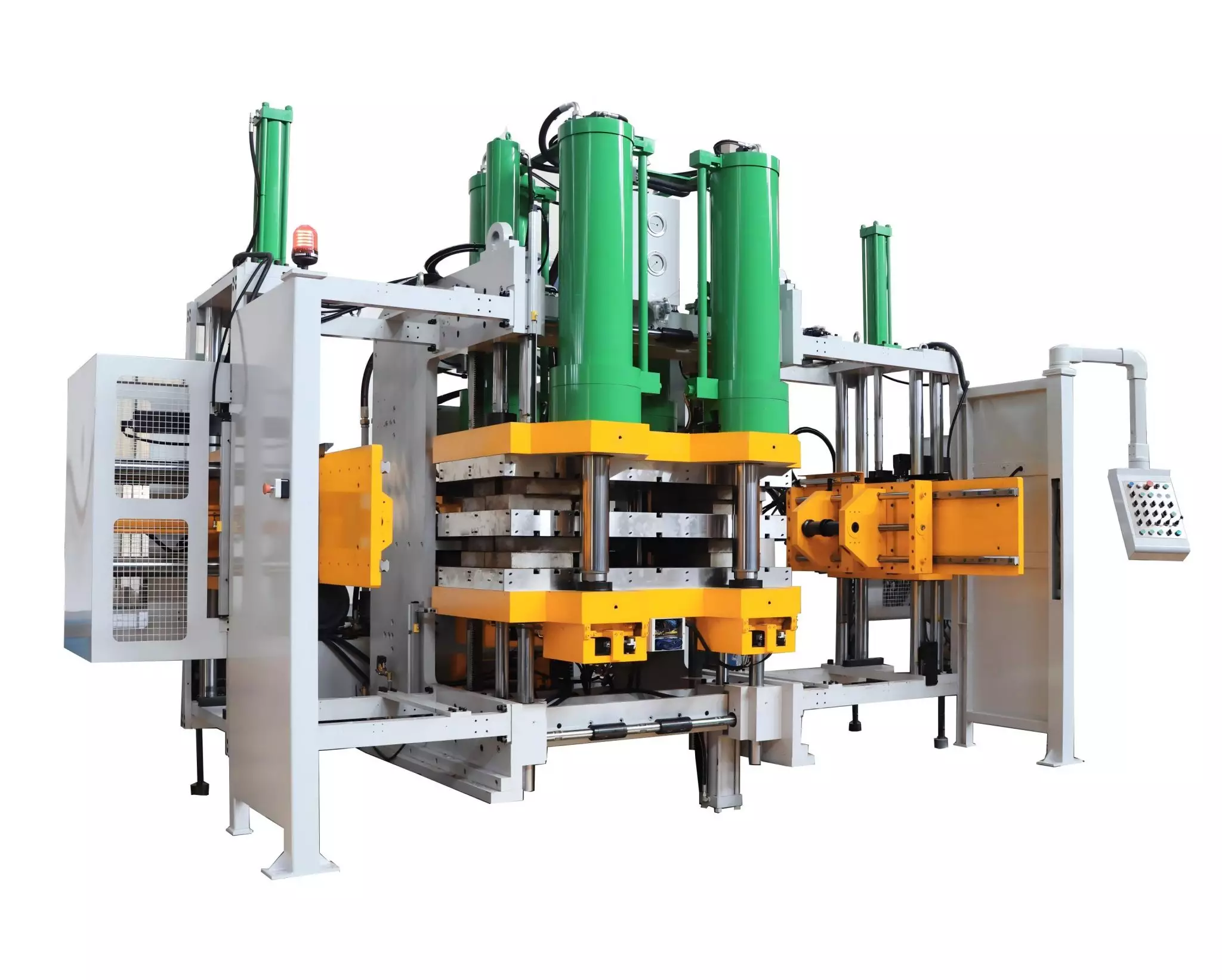
Sustaining high clamping force prevents parting-line flash when high-pressure liquid or solid elastomeric material floods internal cavity spaces. Heavy-duty hydraulic cylinders or hydromechanical toggle mechanisms lock moving platens firmly against stationary platens throughout the curing cycle.
Solid tie-bar structures and guided support rails maintain rigid platen parallelism under peak hydraulic loads. Preventing platen tilting protects expensive mold cavities against localized wear and preserves tight dimensional tolerances on finished components.
Automated Part Ejection and Conveyor Integration
Horizontal mold orientation simplifies the integration of conveyor systems and robotic pick-and-place units directly beneath the mold opening. Once ejection pins actuate, finished components can be transferred onto downstream handling equipment without manual intervention, accelerating cycle resets and reducing labor demands.
Integrated mechanical ejectors or pneumatic blow-off nozzles dislodge flexible parts from core pins smoothly. Automated part discharge minimizes mold-open dwell times, directly enhancing overall daily production throughput.
High-Voltage Application Configurations and Insulator Production Capabilities
Manufacturing heavy-duty power grid components requires large-volume shot capacity paired with specialized clamping mechanisms to handle long core geometries. Tailored equipment setups incorporate dosing units, metering pumps, and robust clamping frames to process specialized silicone formulations reliably.
To support power transmission infrastructure, our HWAYI LSR Insulators Molding Machine incorporates an LSR clamping machine and an LSR pump machine with dosing unit suitable for liquid silicone products. This specialized hardware produces up to 1000 kV high hollow core insulators, arrestors, high voltage cable joint bodies, stress cones, and cable terminals.
Closed-Loop Thermal Regulation Across Platen Zones
Vulcanization kinetics depend on maintaining constant thermal energy transfer across all mold surfaces throughout active curing phases. Independent electric heating channels governed by closed-loop PID controllers monitor thermocouple inputs continuously, making dynamic energy adjustments.
Operating a calibrated horizontal rubber injection molding machine prevents regional cold spots that cause incomplete cross-linking or durometer variations in thick part sections. Uniform thermal fields produce stable physical properties across every batch cycle.
Multi-Stage Injection Velocity and Pressure Profiling
Complex rubber components with intricate wall geometries demand dynamic injection profiles to prevent material hesitation or air entrapment. Computerized control platforms execute multi-stage velocity switches, transitioning from rapid initial filling speeds to controlled holding pressures.
Regulating holding pressure compensates for volumetric material shrinkage as polymer chains cross-link under heat. Precise pressure modulation maintains uniform part density without causing mechanical stress or parting-line flash.
Automated Material Degassing and Atmospheric Evacuation
Trapped air within raw compound charges creates internal micro-voids, blisters, and surface defects that compromise component structural integrity. Automated vacuum systems enclose mold cavities prior to full compression, rapidly pulling ambient air from internal channels.
Synchronizing vacuum valve timing with initial clamping movements accelerates atmospheric evacuation before compound cross-linking initiates. Efficient degassing preserves dielectric strength and mechanical durability in high-density elastomer products. By removing volatile entrapped gases before they can interfere with the curing process, vacuum-assisted molding also minimizes the risk of post-demolding surface blooming—where entrapped volatiles later outgas and leave whitish residues on finished parts—reducing secondary cleaning operations and scrap rates.
Integration of Networked Control Interfaces and MES Communications
Modern industrial platforms feature advanced programmable logic controllers that record operational telemetry in real time. Processing data, including hydraulic pressure curves, platen temperatures, and cycle durations, is transmitted seamlessly to factory execution platforms.
Running a digital horizontal injection molding machine gives quality control managers complete historical batch traceability for regulatory compliance. Process data analytics enable predictive maintenance scheduling, preventing unexpected downtime and extending equipment operational life.
Conclusion
Understanding the core functions of horizontal processing platforms—from plasticizing accuracy and hydraulic clamping to automated part discharge and digital monitoring—enables manufacturing facilities to optimize operational efficiency. Through our engineering developments at HWAYI, we strive to supply robust processing solutions and technical expertise that assist global manufacturers in achieving precise, reliable, and continuous elastomeric component production.