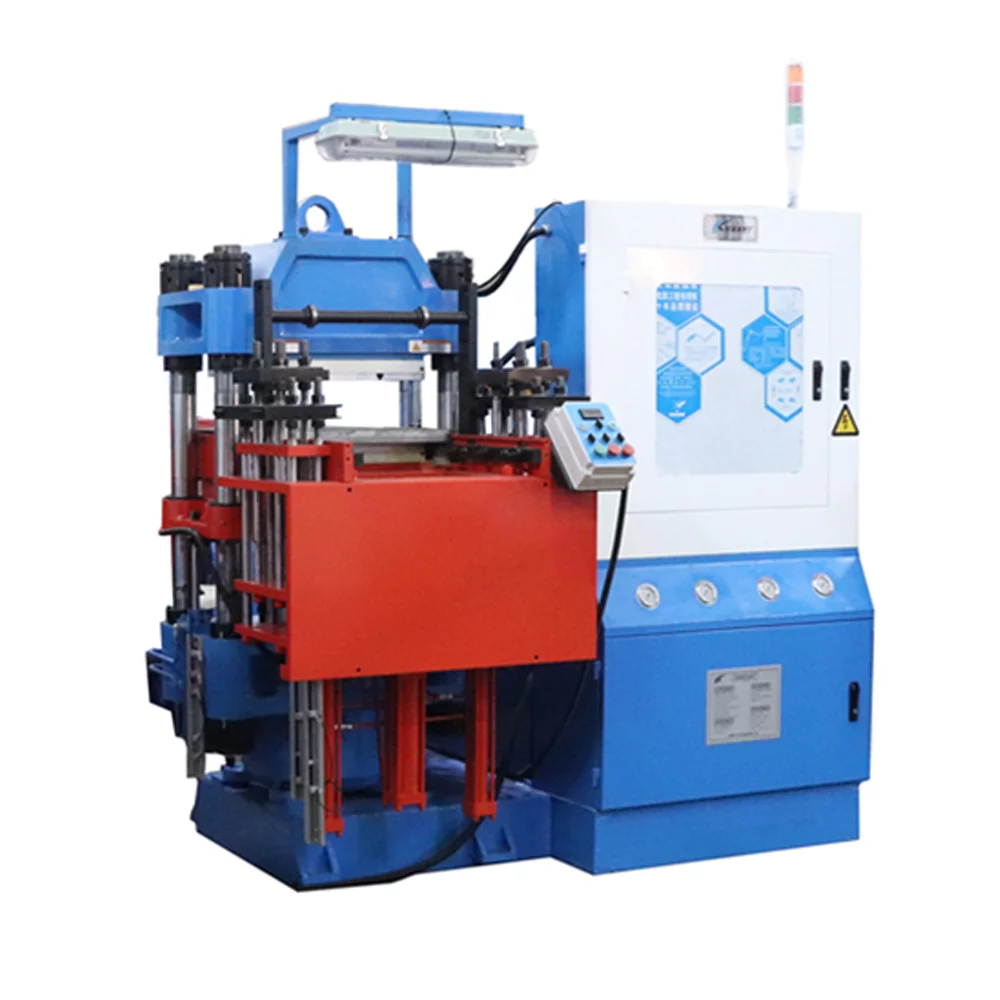
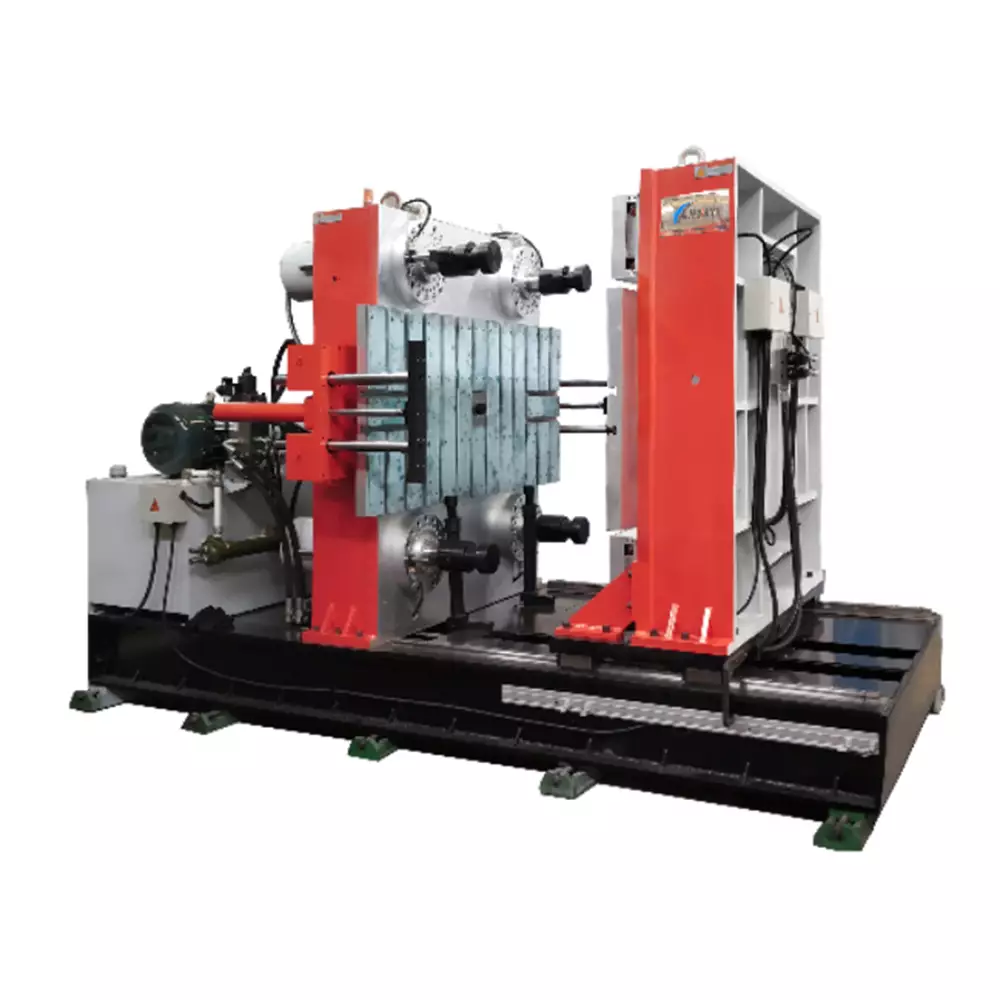
The mold opens, and sometimes the part is already scrap — a thin ridge of flash along the seam, a seal that’s off by a fraction of a millimeter. In rubber injection molding, this kind of failure can often trace back not to the operator, but to the machine itself.
A C-frame hydraulic press looks straightforward on a spec sheet: clamping force, injection capacity, a price. But those numbers only tell part of the story. Whether the press performs well comes down to how it matches the mold, the material, and the way the line runs.
This article walks through the factors that most often get overlooked during selection, so you can compare machines with a clearer picture of what actually matters.
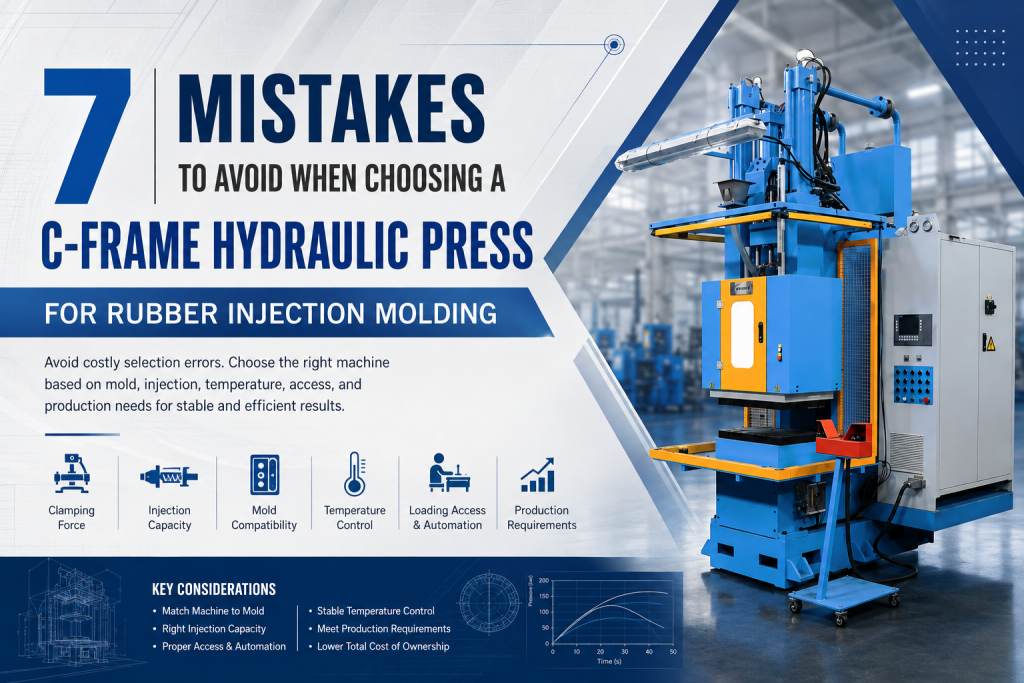
What Is a C-Frame Hydraulic Press for Rubber Injection Molding?
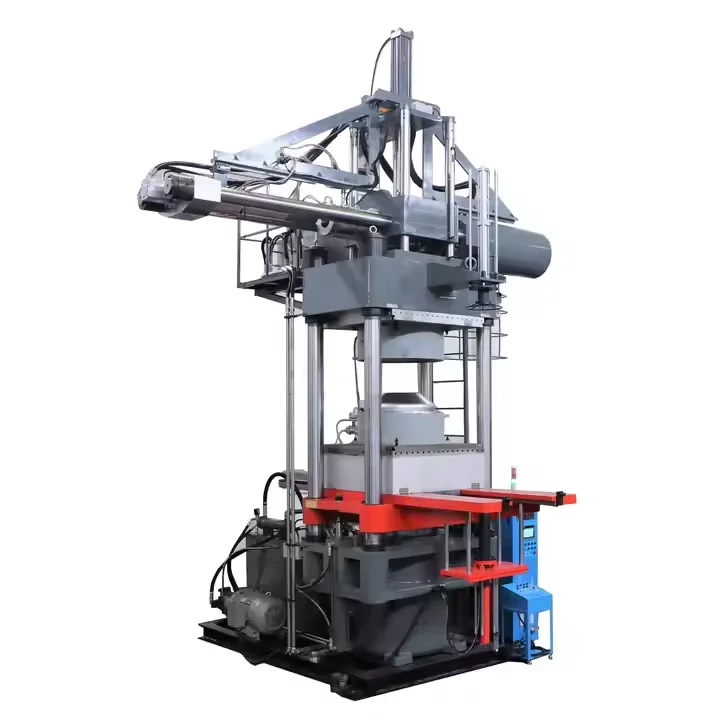
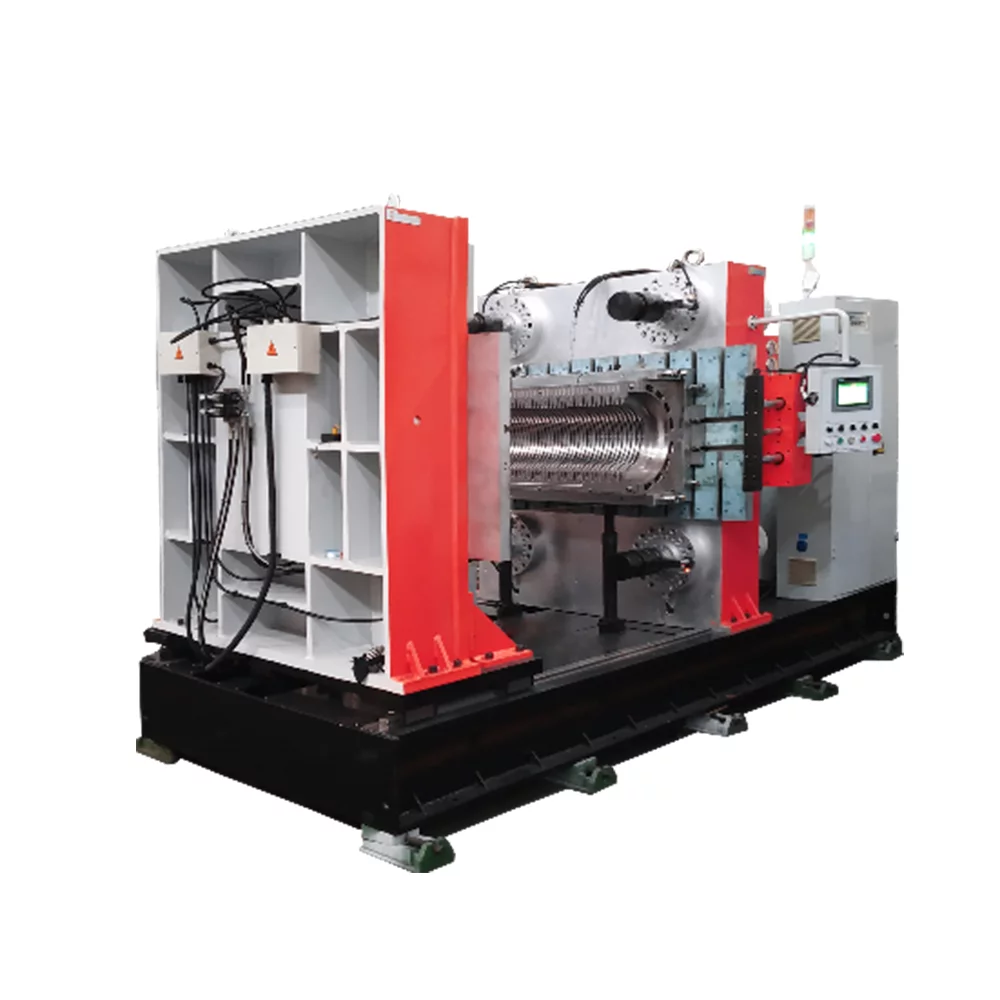
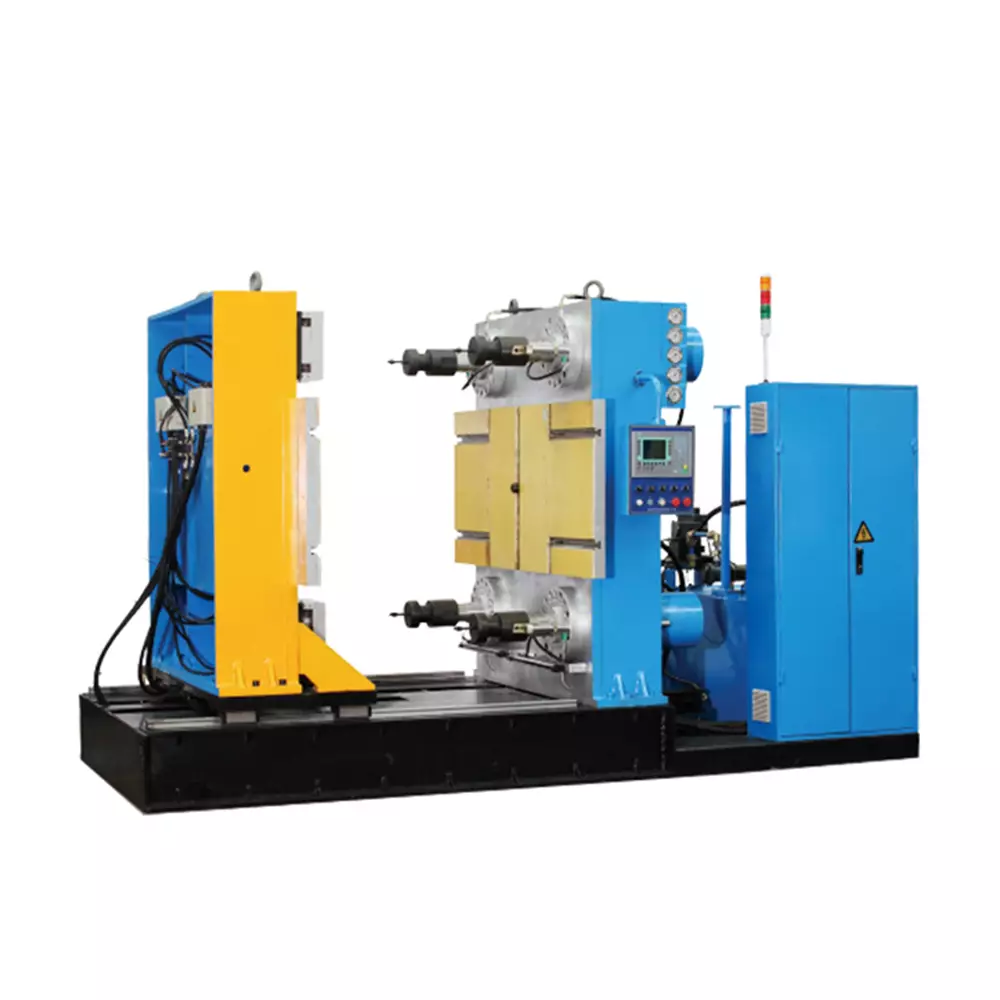
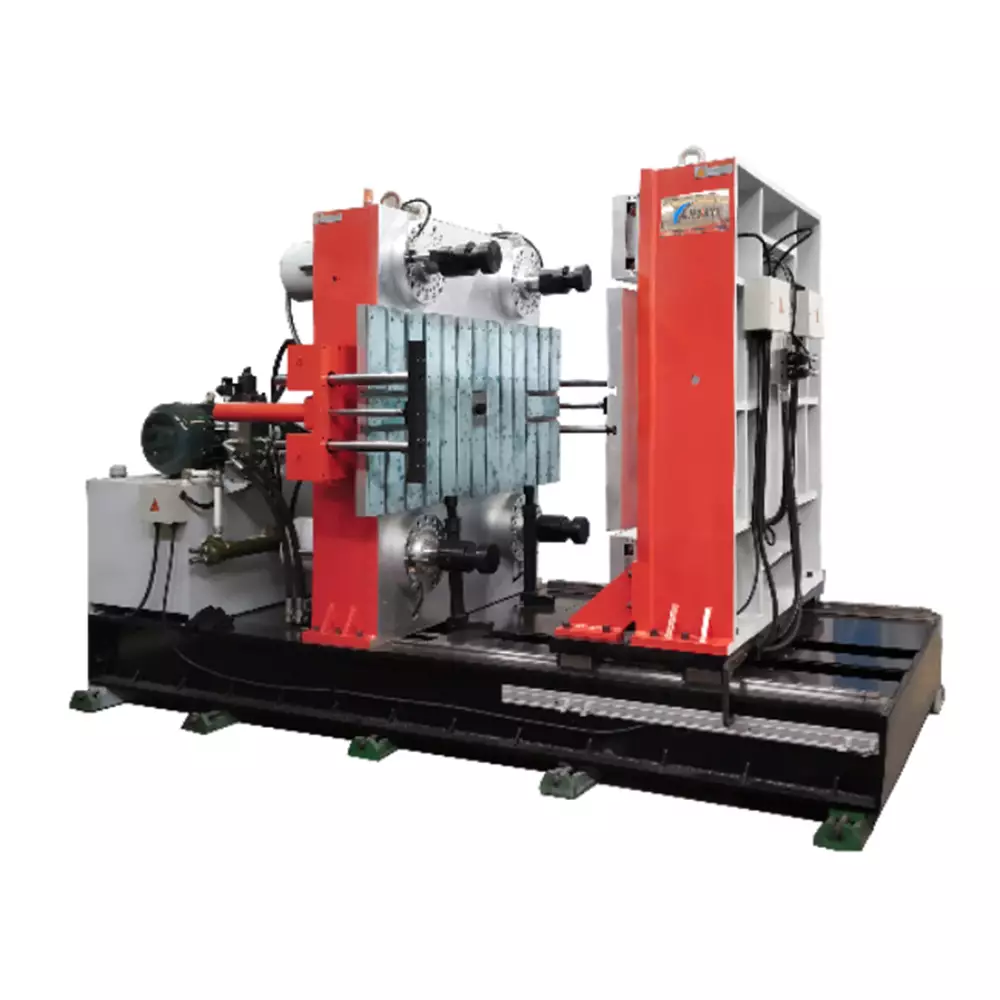
A C-frame hydraulic press for rubber injection molding is a specialized rubber injection molding machine built with an open C-shaped frame. The design provides easier access to the mold area for loading, unloading, and automation.
How It Works
During operation, rubber compound is plasticized and injected into a heated mold under controlled pressure. The hydraulic clamping system keeps the mold closed while the material fills the cavities and cures. Once the curing cycle is complete, the mold opens, and the finished part is removed manually or by an automated handling system.
Typical Applications
- Automotive sealing profiles: EPDM door seals, window seals, weatherstrips, and profile joints.
- Oil-resistant sealing parts: NBR seals, gaskets, and other components used in automotive and industrial equipment.
- Rubber-to-metal components: Bushings, mounts, vibration-damping parts, and bonded sealing components.
- Long rubber profiles:Extended sealing strips and profile sections used in vehicles, doors, windows, and industrial systems.
- Technical molded rubber parts: Custom sealing and functional components for automotive, machinery, and industrial applications.
Mistake 1: Choosing the Machine Based on Clamping Force Alone
Many buyers select a C-frame hydraulic press based mainly on clamping force, assuming higher tonnage means better molding performance. However, clamping force is only one part of the machine configuration. The correct machine selection should also consider part dimensions, mold size, cavity layout, and production requirements.
Insufficient clamping force may cause mold opening during injection, resulting in flash, dimensional instability, and inconsistent product quality. Excessive clamping force, on the other hand, can increase equipment investment and energy consumption without improving molding results.
To avoid this mistake, buyers should calculate the required clamping force based on the projected area of the molded part, mold structure, cavity number, and injection conditions. The injection unit, mold compatibility, and overall machine configuration should also be evaluated before selecting the equipment.
Mistake 2: Choosing the Wrong Injection Capacity
Selecting an unsuitable injection capacity is another common issue when purchasing a C-frame hydraulic press for rubber injection molding. The injection unit should match the actual material requirement of the mold, including rubber shot weight, product weight, runner volume, cavity number, and production range.
If the injection capacity is too small, the machine may not provide enough material for complete mold filling, leading to short shots, incomplete parts, and unstable production. An oversized injection unit may increase equipment cost and reduce efficiency when the additional capacity is unnecessary.
To avoid this mistake, buyers should calculate the required shot volume according to the total material needed for each molding cycle. The injection capacity should be selected based on the rubber compound, product design, and actual production requirements rather than simply choosing a larger system.
Mistake 3: Failing to Check Whether the Mold Fits the Machine
One factor often overlooked during the selection of a C-frame hydraulic press is whether the machine can properly accommodate the intended mold. The mold and machine need to match in terms of dimensions, working space, and movement range to ensure smooth installation and operation.
An unsuitable mold-machine match can cause difficulties during mold installation, operation, and maintenance. Insufficient platen size may prevent proper mold placement, while limited daylight or opening stroke can make mold opening and part removal more difficult. These issues may increase setup time and reduce production efficiency.
To avoid this mistake, buyers should compare the mold dimensions, required opening range, and installation conditions with the machine specifications before purchase. This ensures the selected equipment can support the actual mold requirements.
Mistake 4: Ignoring the Actual Part-Loading and Mold-Access Requirements
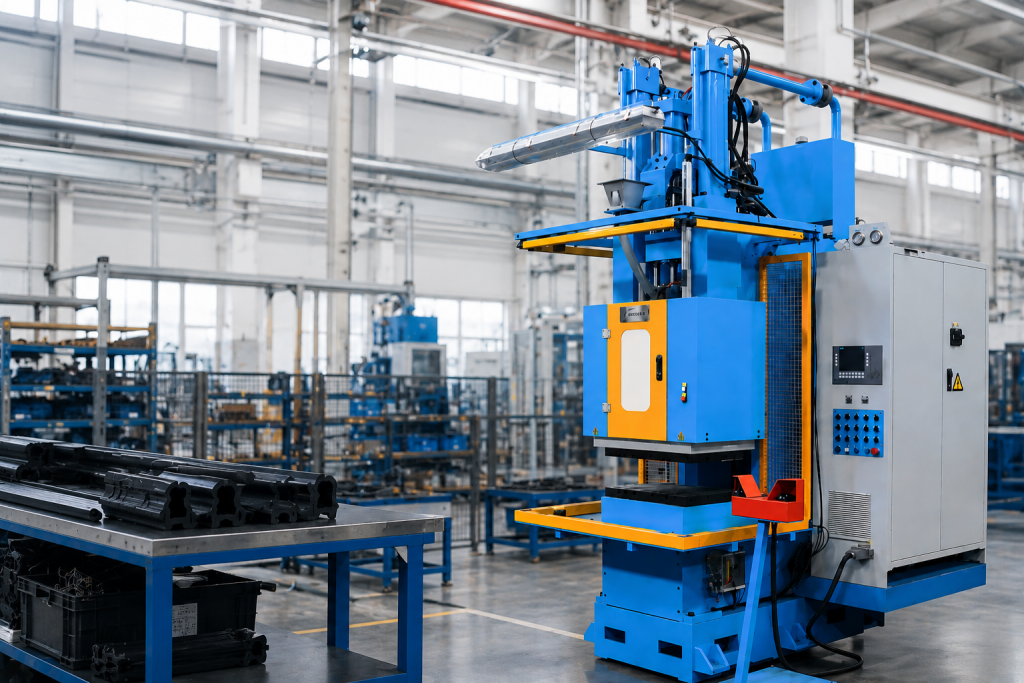
The loading method and mold access requirements are important factors when selecting a C-frame press. One of the main advantages of a C-frame structure is its open working area, which provides easier access for operators and automation systems. However, the machine must still match the actual loading process.
Limited access space can make it difficult to place rubber materials, install inserts, or remove finished parts efficiently. For products such as sealing profiles or rubber components with metal inserts, poor accessibility may increase manual operation time and affect production consistency. It can also create difficulties when integrating automatic loading systems.
To avoid this mistake, buyers should evaluate the complete loading and unloading process before selecting a C-frame hydraulic press. The part handling method, operator access requirements, and automation needs should be considered together with the machine structure.
Mistake 5: Underestimating the Importance of Temperature and Curing Control
Temperature and curing control are critical factors in rubber injection molding but are sometimes overlooked when buyers focus mainly on hydraulic specifications. Stable mold temperature control is essential because rubber curing performance and final product quality are highly affected by heating conditions.
Unstable temperature or uneven heat distribution can cause inconsistent curing, dimensional variation, surface defects, and differences between production batches. Incorrect curing time may also result in under-cured or over-cured rubber parts, affecting product performance.
To avoid this mistake, buyers should evaluate the heating system, temperature control accuracy, heating uniformity, and curing process control of the machine. The selected rubber injection molding machine should match the specific rubber material and product requirements.
Mistake 6: Choosing a Machine Without Matching the Injection and Clamping Controls to the Rubber Process
Injection and clamping control systems must match the requirements of the rubber molding process, but this factor is sometimes underestimated during machine selection. Different rubber compounds and product designs require proper control of injection pressure, injection speed, clamping movement, and pressure holding.
Poor control matching can result in incomplete filling, excessive flash, inconsistent dimensions, and unstable production cycles. For complex rubber parts or products with strict quality requirements, inaccurate pressure and speed control may directly affect molding performance.
To avoid this mistake, buyers should evaluate the machine’s injection and clamping control functions based on the rubber material, product structure, and production requirements. Parameters such as pressure adjustment range, speed control, and process monitoring capability should be considered before selecting a C-frame press.
Mistake 7: Focusing Only on the Initial Machine Price
Selecting equipment based only on the initial purchase price is a common mistake when comparing rubber injection molding machine options. A lower quotation may reduce upfront investment, but it does not represent the total cost during the machine’s operating life. Energy consumption, maintenance, spare parts, downtime, and technical support all affect long-term production costs.
A low-cost machine may result in longer cycle times, higher scrap rates, frequent maintenance, or unexpected production interruptions. These additional expenses can reduce overall manufacturing efficiency.
To avoid this mistake, buyers should compare the total operating cost of different machines, including production capacity, energy efficiency, reliability, maintenance requirements, and after-sales service. When evaluating rubber molding press manufacturers, the complete equipment value should be considered rather than only the initial price.
How to Choose the Right C-Frame Press for Your Rubber Application
Avoiding the mistakes mentioned above starts with having a clear understanding of the actual rubber molding requirements. Before selecting a C-frame press, buyers should collect and confirm the key production information to ensure the machine configuration matches their application needs.
The main factors to consider include:
- Rubber material
- Part dimensions and weight
- Mold dimensions
- Number of cavities
- Required clamping force
- Injection volume
- Injection pressure
- Mold temperature
- Curing time
- Production capacity
- Loading and unloading method
- Automation requirements
By preparing these details before machine selection, buyers can compare different rubber injection molding machine options more effectively and communicate their requirements clearly with suppliers.
Why Choose the Hwayi C-Frame Rubber Injection Molding Machine?
The mistakes discussed above can be avoided by selecting a machine that matches the actual rubber molding requirements. Hwayi’s C-frame rubber injection molding machine is designed with specific features to address common challenges in rubber injection molding applications, especially for EPDM and NBR sealing products.
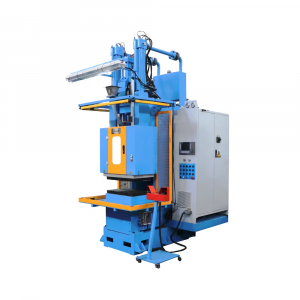
- Complete C-Frame Machine Configuration: The complete open C-frame structure and flexible machine configurations allow the equipment to match different mold sizes and production requirements, avoiding selection based only on clamping force.
- Accurate Injection Capacity and Material Control:The all-in-all-out injection system with no injection runner improves material utilization, while injection accuracy of ±5% and CPK ≥67 ensure stable rubber filling performance.
- Better Mold Compatibility: Functions including upper lifter, sliding system, ejector, and core-pulling valves allow the machine to support different mold structures and movement requirements.
- Easy Part Loading and Mold Access:The complete open C-frame design provides convenient access for loading rubber profiles, placing inserts, removing parts, and integrating automation systems.
- Stable Temperature and Curing Performance: Platen temperature tolerance within ±2°C, PID temperature calibration, and Germany-imported insulation plates provide stable heating conditions for consistent rubber curing.
- Flexible Injection and Clamping Process Control: Top injection and bottom injection configurations, together with precise injection control, allow the machine to match different rubber materials, product designs, and molding processes.
- Lower Total Production Cost:The no broken rubber feeding area design reduces material waste, while optional double working stations improve production efficiency and help lower manufacturing costs.
From Selection Mistakes to the Right Rubber Molding Solution
Choosing the right C-frame hydraulic press requires careful consideration of clamping force, injection capacity, mold compatibility, process control, and overall production requirements. By avoiding these common selection mistakes, manufacturers can improve molding stability and production efficiency.
Hwayi provides reliable C-frame rubber injection molding machines for EPDM, NBR, and other rubber applications with flexible configurations and precise control systems. Contact us today to discuss your rubber molding requirements and find the right machine solution for your production needs.